

In high-pressure instrumentation systems, the valve itself is only one part of the connection. The interface between the valve and the tubing can be equally important. A valve with a robust body and high pressure rating may still become a weak point if the tubing connection is poorly selected, difficult to install, or unable to withstand vibration and pressure fluctuations. This is one reason double ferrule tube fitting ball valves are widely considered for demanding instrumentation and fluid systems.
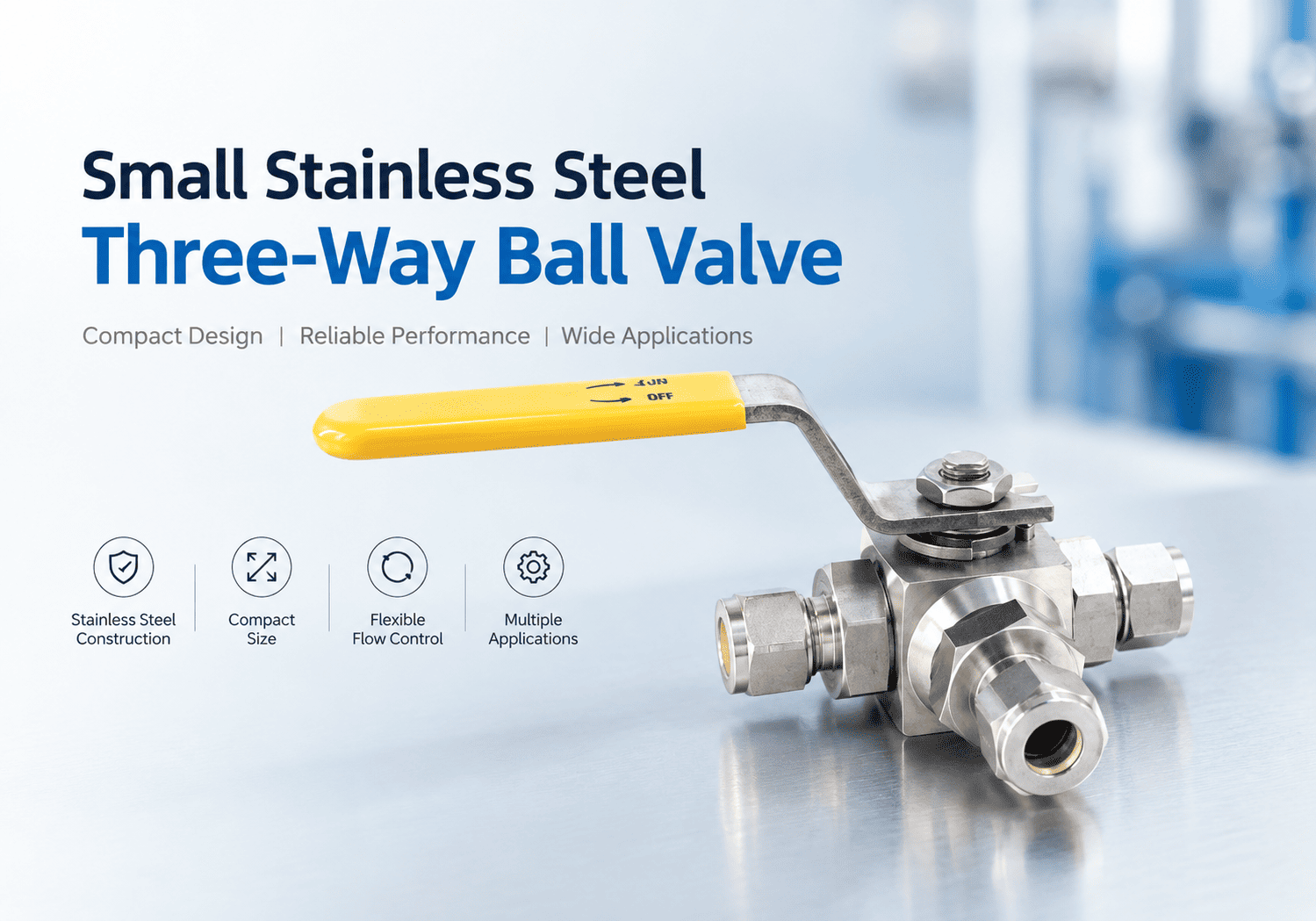
By combining a compact quarter-turn ball valve with a mechanical tube fitting connection, this valve configuration provides both quick isolation and a reliable tubing connection without requiring a separate threaded adapter. For engineers and procurement teams, the combination can simplify system design while helping reduce potential connection points in the overall assembly.
What Is a Double Ferrule Tube Fitting Ball Valves?
A double ferrule tube fitting ball valves combines two functions in one component:
Ball valve: Provides fast on/off isolation.
Double ferrule tube fitting: Connects the valve directly to instrumentation tubing while providing mechanical gripping and sealing.
A typical ball valve uses a quarter-turn mechanism. Rotating the handle approximately 90 degrees moves the internal ball between the open and closed positions.
The tube fitting section uses a front ferrule and a back ferrule. During proper assembly, the ferrules interact with the tubing and fitting body to establish the mechanical connection.
The result is a compact valve assembly that can be installed directly into a tubing system.
This configuration is particularly useful where engineers need to combine isolation, compact dimensions, and tube connection reliability.
Why Combine a Válvula de bola with a Tube Fitting?
In a conventional installation, a threaded ball valve may need additional components to connect it to instrumentation tubing.
For example:
Tube → Adapter → Threaded Ball Valve
Every additional component introduces another connection interface.
A tube fitting ball valve can simplify the arrangement:
Tube → Tube Fitting Ball Valve → Tube
This can provide several practical advantages.
Fewer Connection Interfaces
An integrated tube fitting connection can eliminate the need for a separate adapter in many installations.
Fewer components can mean:
- Less installation complexity
- Fewer potential leak interfaces
- Reduced assembly size
- Easier maintenance
- Cleaner tubing layouts
For compact instrumentation panels, this can be particularly valuable.
Easier System Integration
A tube fitting ball valves can be installed directly into compatible instrumentation tubing.
This makes it easier to integrate the valve into:
- Pressure measurement systems
- Hydraulic circuits
- Pneumatic systems
- Process instrumentation
- Gas distribution systems
- Laboratory equipment
The connection type should always match the tubing material, outside diameter, pressure requirements, and applicable installation procedure.
Why Is the Double Ferrule Design Important?
The key characteristic of a double ferrule connection is that the two ferrules perform different mechanical functions. The front ferrule primarily contributes to sealing. The back ferrule provides tube gripping and helps maintain the mechanical integrity of the connection. This separation of functions is particularly useful in applications exposed to vibration, pressure cycling, or thermal changes. It is important to understand that a double ferrule connection does not automatically make an installation leak-proof. Proper tube preparation, fitting assembly, material compatibility, and installation procedure remain essential.
Your existing tube-fitting guidance already emphasizes the importance of correct tube insertion, tightening, tubing condition, and support.
The advantage of integrating the tube fitting directly with the ball valve is that the engineer can specify the valve and connection as one engineered assembly, rather than treating them as completely separate components.
How Does a Tube Fitting Ball Valves Perform in High-Pressure Systems?
High-pressure service places greater demands on every part of a fluid system.
Engineers should not evaluate the valve body alone.
The complete pressure boundary includes:
- Valve body
- Ball
- Seats
- Stem
- Tube connection
- Ferrules
- Tubing
- Seals
- Other connected components
The weakest component can determine the practical performance of the assembly.
For this reason, a high-pressure tube fitting ball valve should be selected based on the complete system rating, not simply the advertised pressure rating of the valve.
Hongji’s current product range includes a 6000 psi stainless steel 316L dual-ferrule ball valve, while the company’s broader stainless steel ball valve range covers approximately 1,000 to 6,000 psi depending on the model and configuration. This illustrates an important engineering principle: The connection system must be capable of supporting the intended operating conditions along with the valve itself. A double ferrule tube fitting ball valve is more than a small ball valve with a different connection. It is an integrated component designed to address two important requirements in instrumentation and industrial fluid systems: reliable isolation and dependable tubing connection.
The combination can be particularly useful when systems require compact dimensions, high pressure capability, vibration resistance, and clean tubing layouts. For engineers and buyers, the most important selection criteria are not simply valve size or price. The correct specification should consider working pressure, tube OD, material, seat, temperature, process medium, connection type, and installation requirements. For demanding applications, selecting the valve and tube connection as an integrated system can help simplify installation and improve the long-term reliability of the fluid system.
Hongji currently offers válvula de bola de acero inoxidable configurations including 6000 psi 316L dual-ferrule ball valves, as well as other tube-fitting and threaded ball valve configurations for instrumentation and industrial applications.


 Spanish
  English
  Arabic
  Russian