
When you see a stainless steel 5 valve manifold connected to a pressure gauge, transmitter, or differential pressure instrument, it might look complicated. But understanding how it works is actually quite simple once you know the function of each valve and how they interact with the gauge.
Today, we’ll explain what a 5 valve manifold is, how it works with the gauge, and why it’s essential in process control systems.
What Is a 5 Valve Manifold?
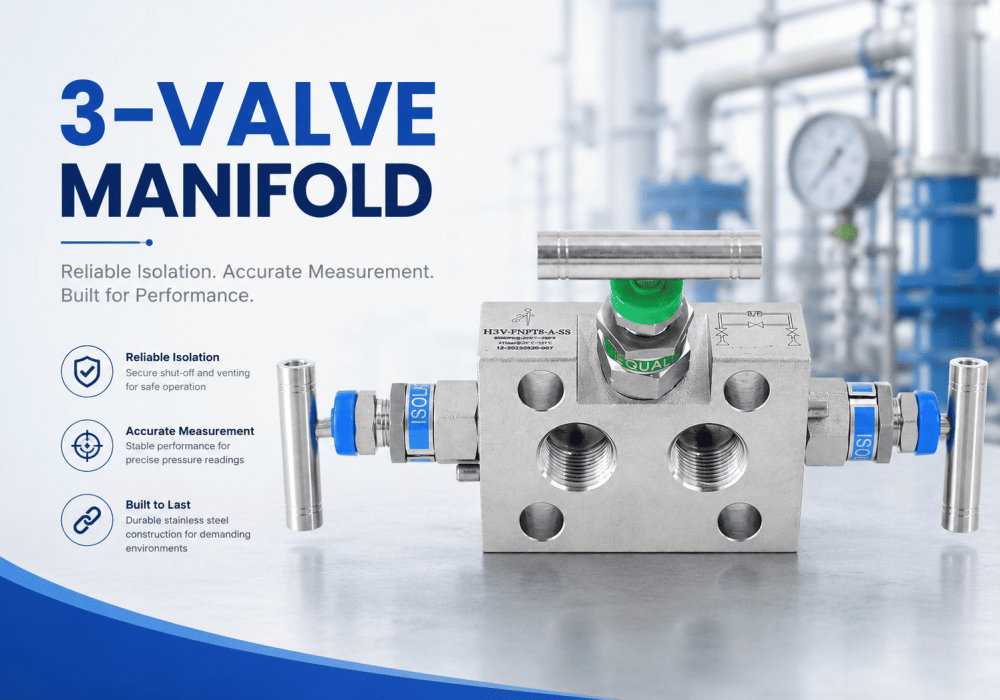
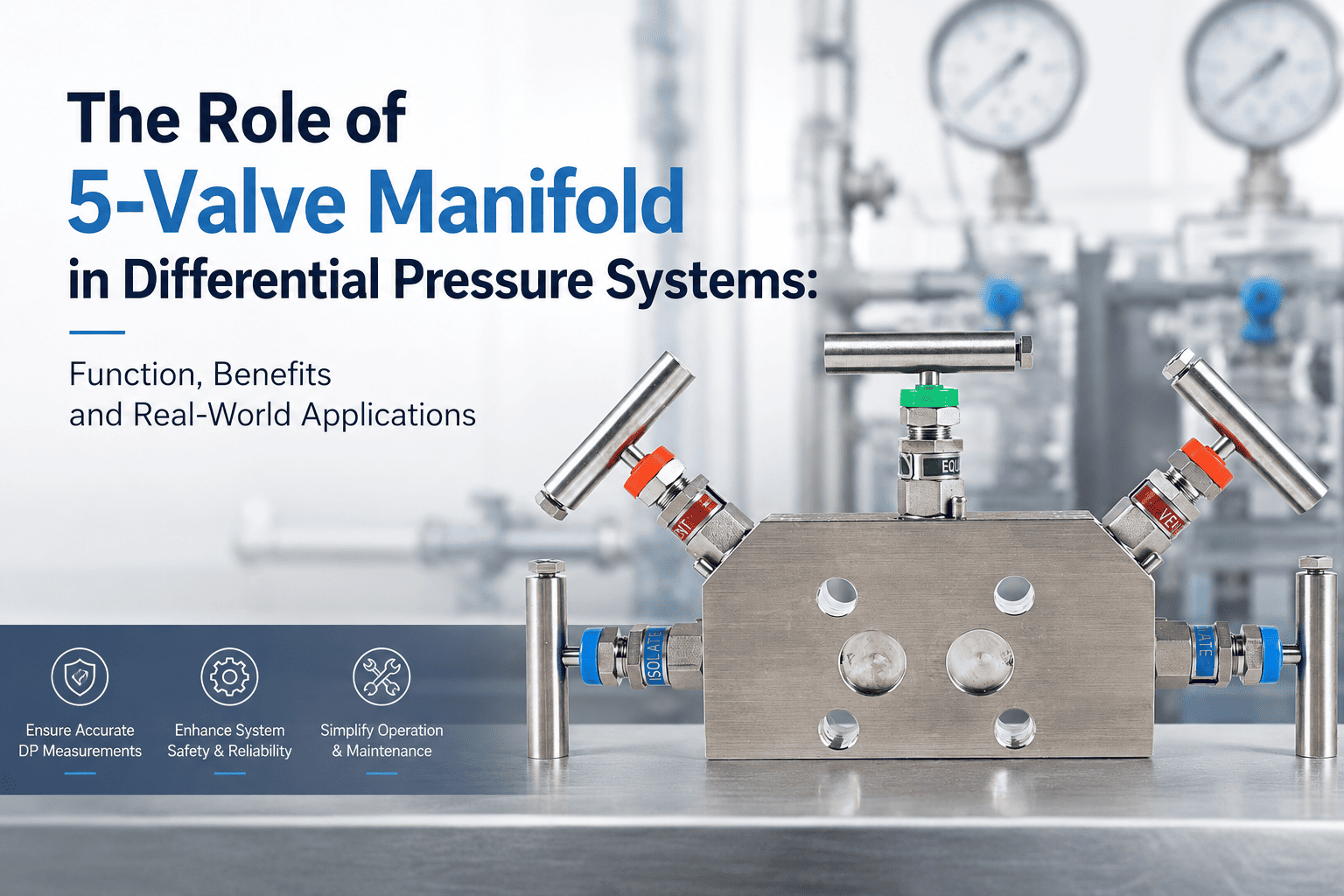
A 5 valve manifold is a compact assembly made up of five individual valves integrated into one stainless steel block. It’s commonly used with differential pressure transmitters or gauges in industries like oil & gas, chemical processing, and power generation.
How It Works with a Pressure Gauge or Transmitter
When connected to a pressure gauge or differential pressure transmitter, the 5 valve manifold acts as the control hub between the process and the measuring device.
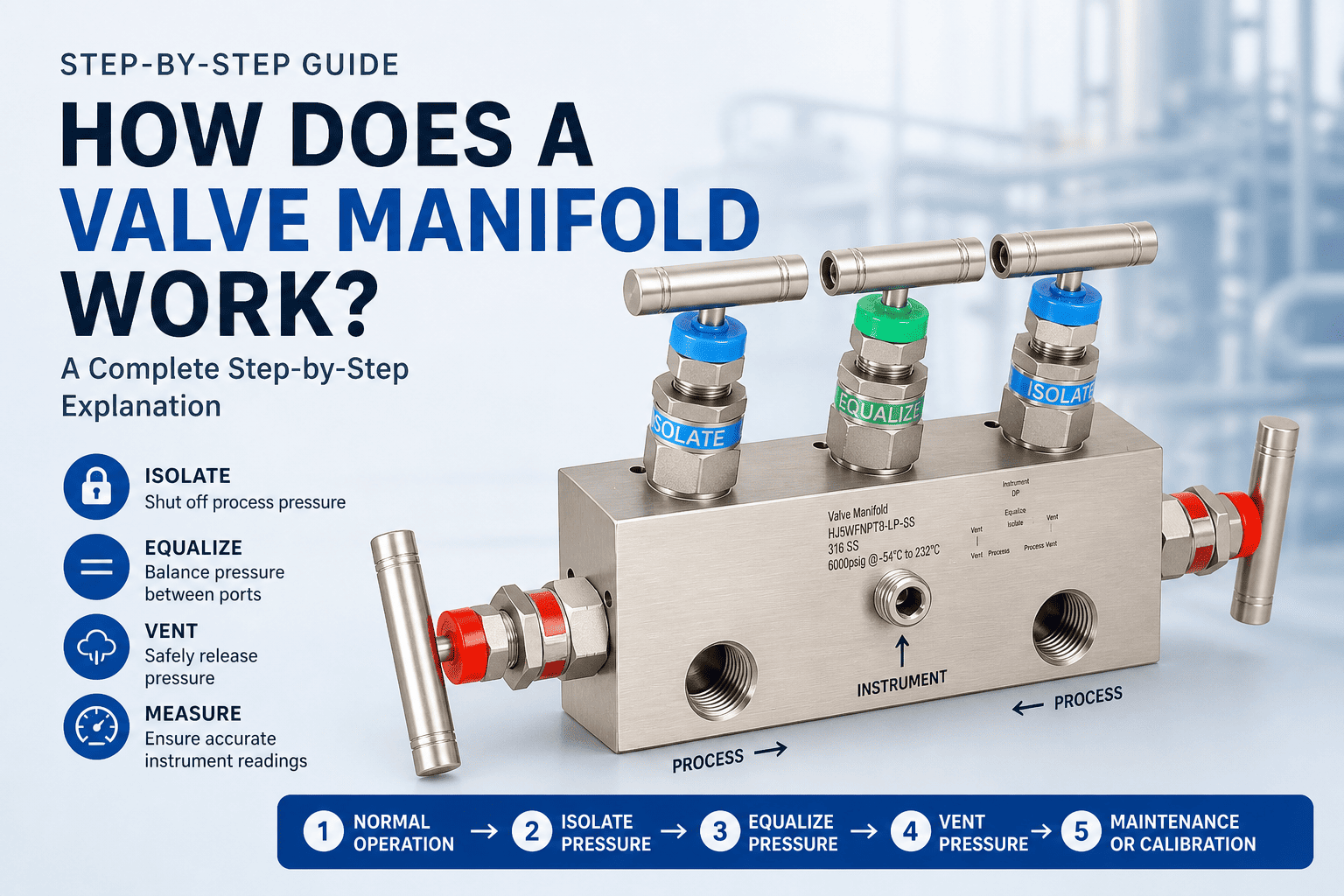
Here’s a simple breakdown of how it operates:
Normal Operation
- Both block valves are open.
- Equalizing and vent valves are closed.
- The gauge reads the true process pressure or differential pressure.
- This is the typical setup when the system is running and measurements are being recorded.
Calibration or Zeroing
- Close both block valves to isolate the process.
- Open the two equalizing valves to balance both sides of the transmitter or gauge.
- The gauge now reads zero differential pressure, allowing for calibration or system testing.
- This step ensures that the gauge gives accurate readings over time.
Venting or Bleeding
- With the block valves closed, open the vent valve to safely release trapped fluid or gas.
- This prevents pressure buildup and helps protect the gauge from overpressure damage.

Advantages of Using a 5 Valve Manifold
- Simplified maintenance: You can calibrate, isolate, or vent the system without disconnecting the instrument.
- Enhanced safety: Prevents sudden pressure surges to the gauge.
- Compact design: Reduces leak points compared to multiple separate valves.
- Durability: Stainless steel resists corrosion and can handle high pressure and temperature conditions.
A stainless steel 5 valve manifold plays a vital role in connecting and protecting pressure gauges and transmitters. By allowing isolation, equalization, and venting, it ensures accurate measurement and system safety—all within a single, compact assembly.
If you’re selecting a stainless steel valve manifold for your application, always consider material quality, pressure rating, and compatibility with your gauge or transmitter. Stainless steel remains the top choice for reliability and long-term performance.
 English
  Arabic
  Spanish
  Russian