
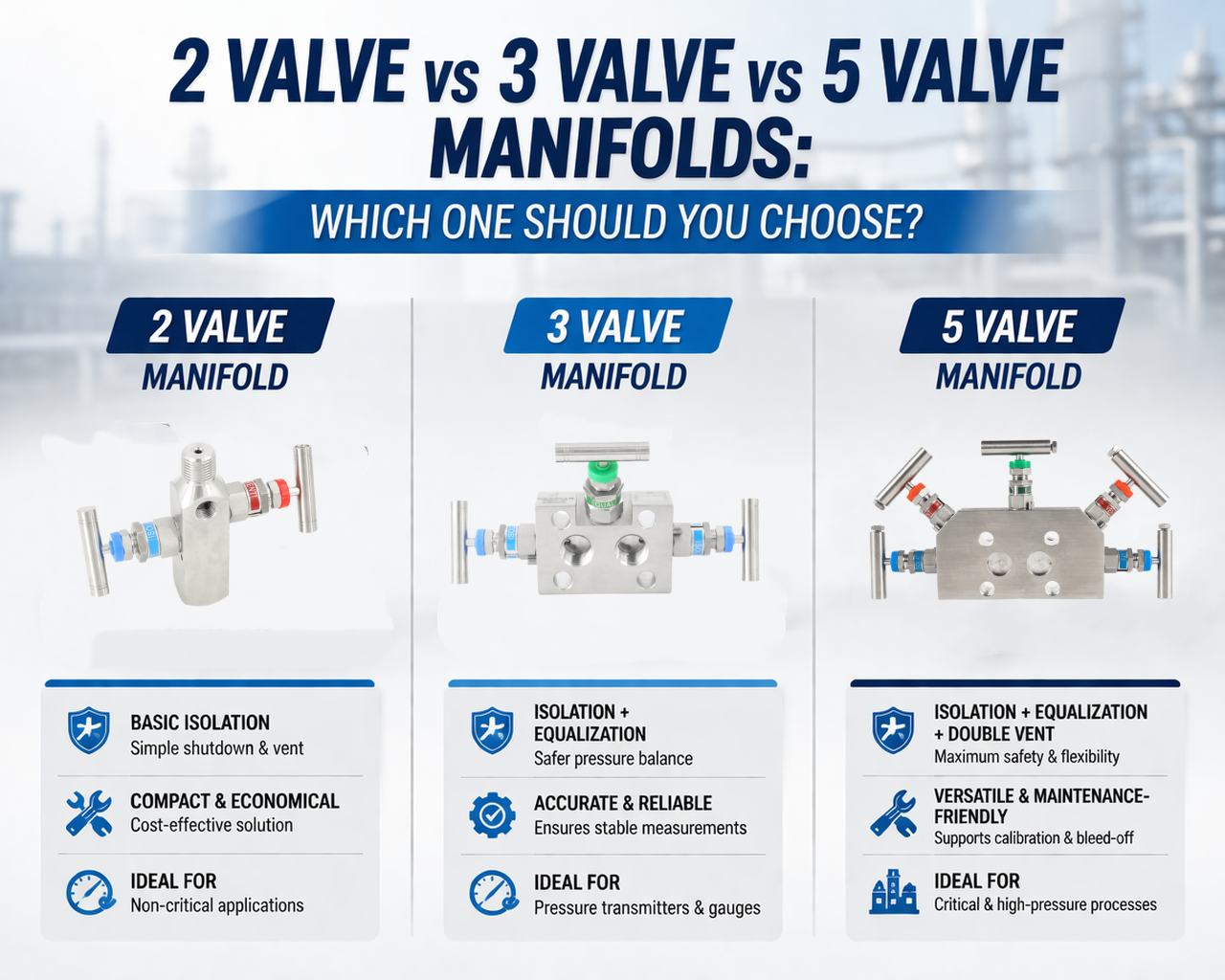
When designing a pressure instrumentation system, selecting the right manifold type is crucial. The most common options include 2 valve, 3 valve, and 5-клапанные коллекторы, each serving different levels of control and complexity.
A 2 valve manifold is designed for basic isolation and venting, making it ideal for simple pressure systems.
This configuration is also widely known as a block and bleed manifold, which integrates isolation and venting functions into one compact unit.
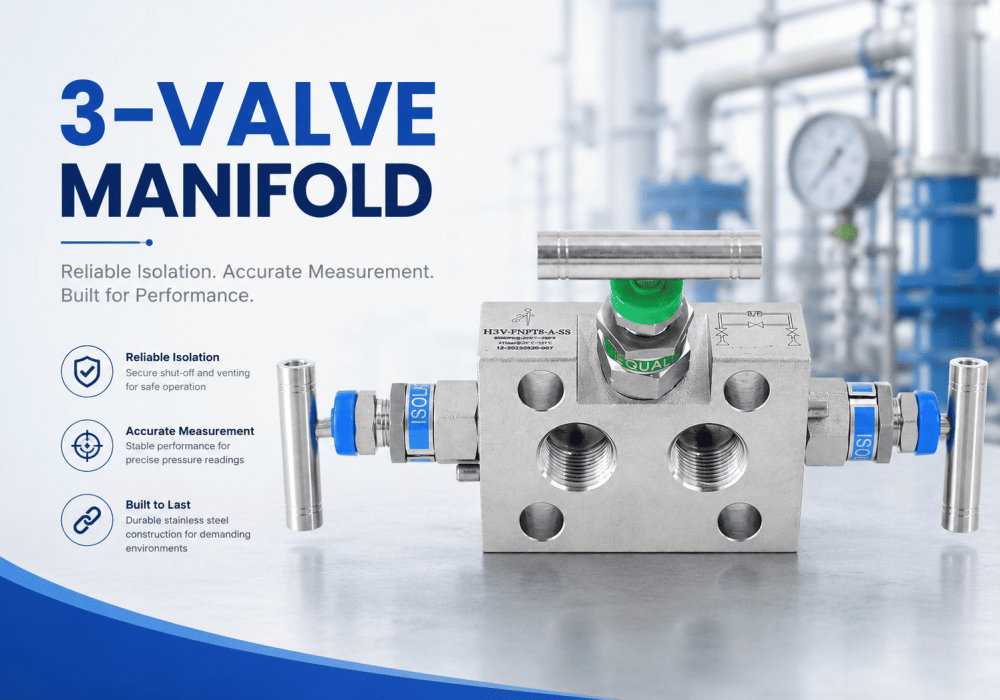
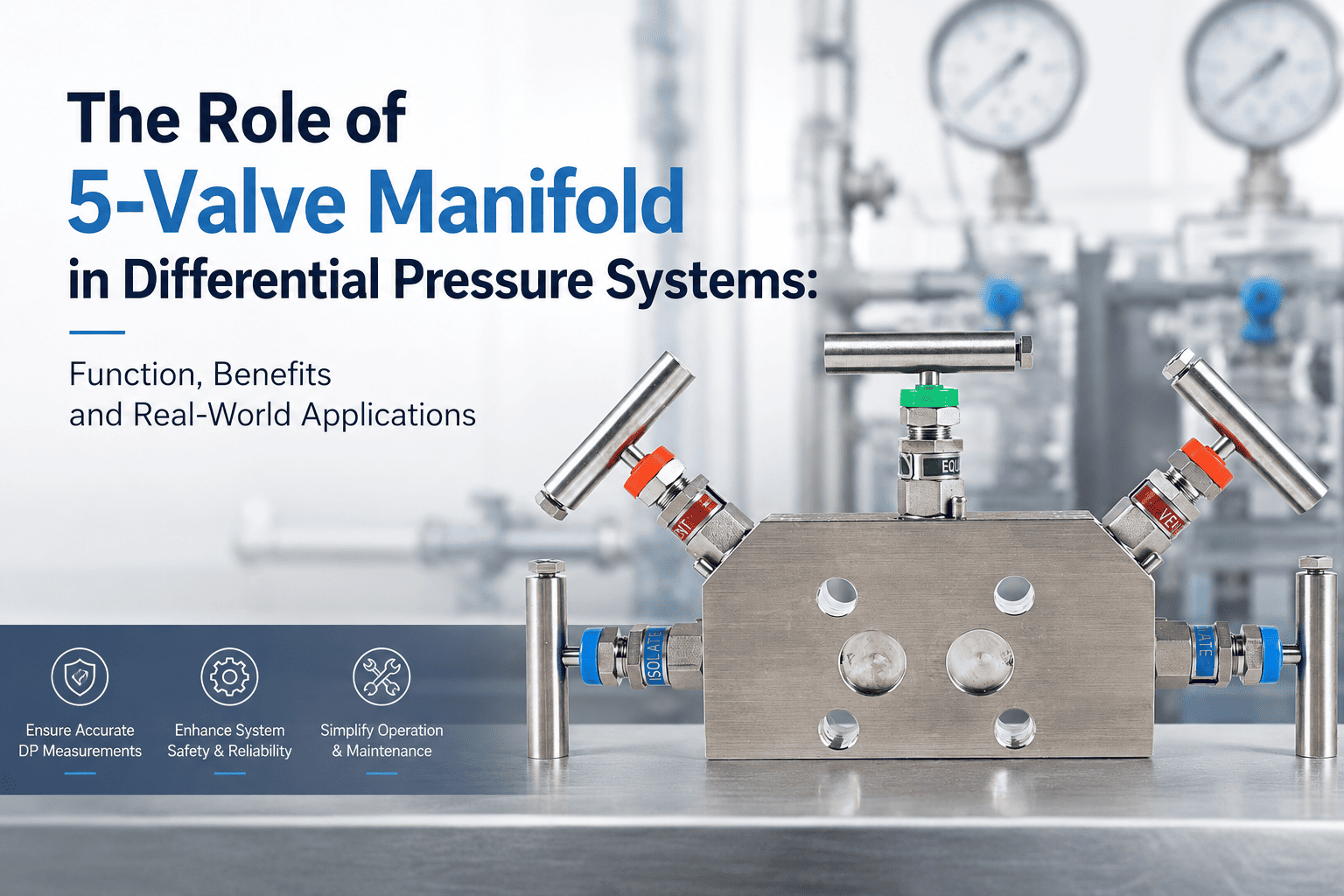
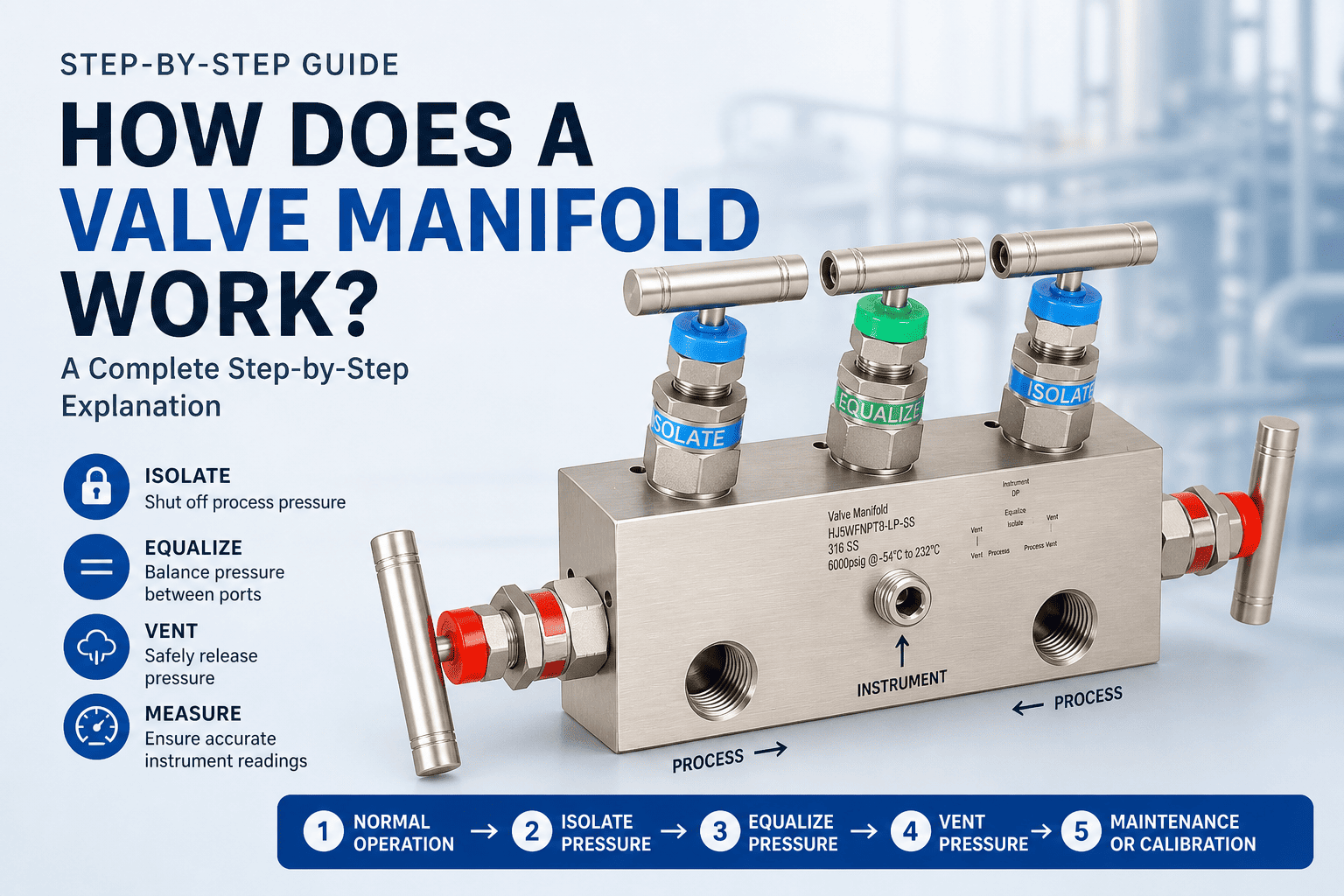
A 3 valve manifold adds an equalizing valve, allowing it to balance pressure in differential pressure systems. A 5 valve manifold provides full control, including isolation, equalization, and venting, making it suitable for high-precision applications.
When to Use Each 2 Valve vs 3 Valve vs 5 Valve Manifolds?
For standard pressure measurement systems, a 2 valve manifold is often sufficient and cost-effective.
To better understand how a 2 valve manifold works in real applications, you can read our detailed guide on 2 valve manifold types and functions.
Choosing the correct manifold depends on system complexity, accuracy requirements, and budget.
If you need help deciding, check our guide on how to choose the right manifold for your system.
 Russian
  English
  Arabic
  Spanish