

When selecting an instrumentation valve, most engineers focus on pressure rating, material, temperature range, and valve type. But there is another specification that is just as important—and often overlooked, the thread connection.
A stainless steel needle valve rated for 6,000 psi is of little use if its thread does not match the system. NPT, BSPT, BSPP, Metric, and SAE threads can look surprisingly similar. However, differences in thread geometry, pitch, sealing method, and application can have a major impact on system reliability.
Choosing the right thread type can help prevent leakage, simplify installation, and improve the service life of instrumentation equipment.
This guide explains the most common instrumentation valve thread types and shows how to choose the right connection for your application.
The thread is not simply a mechanical connection. In many valve designs, it is part of the pressure boundary and plays an important role in maintaining a reliable connection.
The 3 Thread Types You Need to Understand First
For instrumentation valves used in international industrial applications, three thread standards appear particularly often:
NPT, BSPT, and BSPP.
Understanding the difference between these three will solve many common connection problems.
NPT — National Pipe Taper
NPT stands for National Pipe Taper. It is one of the most widely used pipe thread standards, particularly in the United States and North America. NPT threads are tapered. The thread diameter gradually changes along the threaded section, allowing the mating threads to create an interference fit. For many NPT connections, sealing is achieved through the threads together with an appropriate thread sealant.
Typical applications
NPT connections are commonly found in:
- Needle valves
- Ball valves
- Valve manifolds
- Pressure gauges
- Pressure transmitters
- Instrumentation fittings
- الأنظمة الهيدروليكية والهوائية
Why NPT is popular
NPT is widely available and has become a common connection standard for industrial instrumentation equipment.
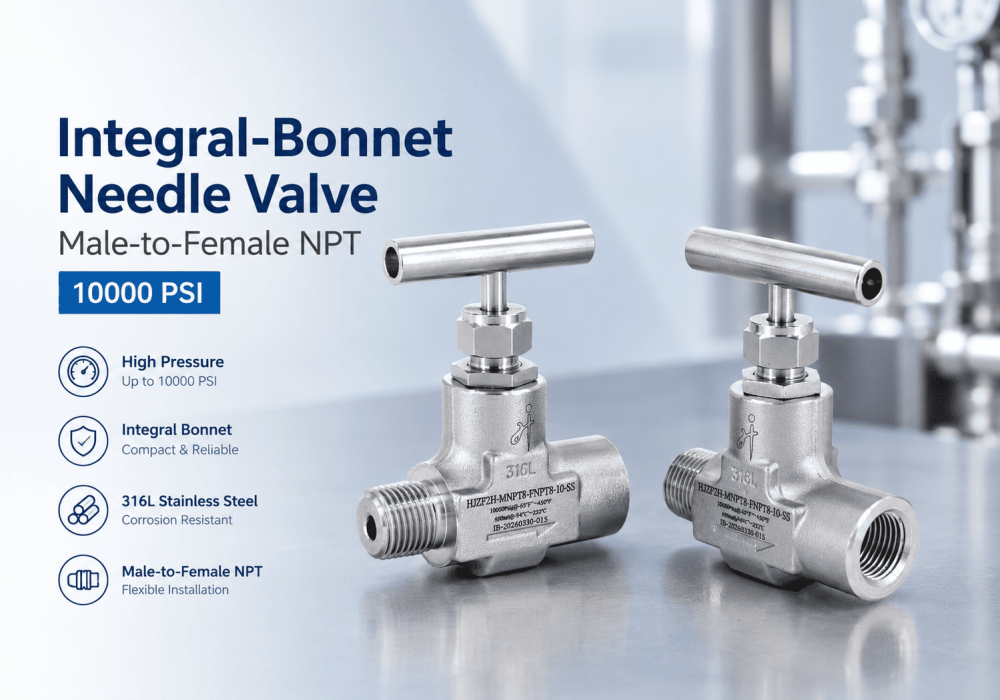
For example, a صمام إبرة من الفولاذ المقاوم للصدأ may be specified with: 1/2″ NPT female × 1/2″ NPT female or 1/2″ NPT male × 1/2″ NPT female The important point is not simply the 1/2″ size. The thread standard must also match.
BSPT — British Standard Pipe Taper
BSPT stands for British Standard Pipe Taper. Like NPT, BSPT uses a tapered thread. This makes BSPT visually similar to NPT, but the two standards have important dimensional differences. BSPT is widely used in many international markets, including applications across Europe, Asia, Australia, and other regions.
Typical applications
- BSPT can be found in:
- Instrumentation valves
- Process control systems
- Hydraulic equipment
- Pneumatic equipment
- Chemical processing systems
- Industrial piping
The important difference The biggest mistake is assuming: NPT and BSPT are basically the same because both are tapered.
They are not. They use different thread profiles and specifications. Trying to force one into the other can damage the threads and compromise the connection.
BSPP — British Standard Pipe Parallel
BSPP is different from both NPT and BSPT.
The P in BSPP stands for Parallel.
Unlike tapered pipe threads, BSPP threads maintain a constant diameter along the threaded section.
The thread itself is generally not intended to provide the primary seal. Depending on the fitting design, sealing may be achieved with an O-ring, bonded seal, gasket, or another sealing element.
Where BSPP is commonly used
- BSPP connections are widely found in:
- Hydraulic systems
- Instrumentation equipment
- Industrial machinery
- Pressure measurement equipment
- OEM systems
Why BSPP can be attractive
Because the thread is parallel, the connection can be easier to assemble and disassemble without relying on thread interference for sealing.
However, the correct sealing component is essential.
NPT vs BSPT vs BSPP: What Really Matters?
Instead of simply memorizing names, engineers should look at four things:
- Thread profile
NPT and BSP threads have different thread geometries.
- Taper
NPT and BSPT are tapered.
BSPP is parallel.
- Sealing method
Tapered pipe threads commonly use an appropriate thread sealant as part of the sealing system.
Parallel connections typically rely on a dedicated sealing element such as an O-ring or gasket, depending on the design.
- Application standard
The correct thread is often determined by the existing equipment, piping standard, project specification, or regional practice.
Choosing the right instrumentation valve thread is a small decision that can have a major impact on system reliability.
NPT, BSPT, and BSPP may look similar, but they are based on different standards and sealing principles.
Before selecting a valve, always verify:
Thread Standard + Size + Gender + Sealing Method + Pressure Rating
Do not select a threaded valve simply because the nominal size appears to match.
A few minutes spent checking the thread specification before ordering can prevent leakage, installation problems, and costly downtime later.
For instrumentation systems operating under high pressure or harsh conditions, the right connection is not just a specification—it is part of the system’s safety and reliability.


 Arabic
  English
  Spanish
  Russian