
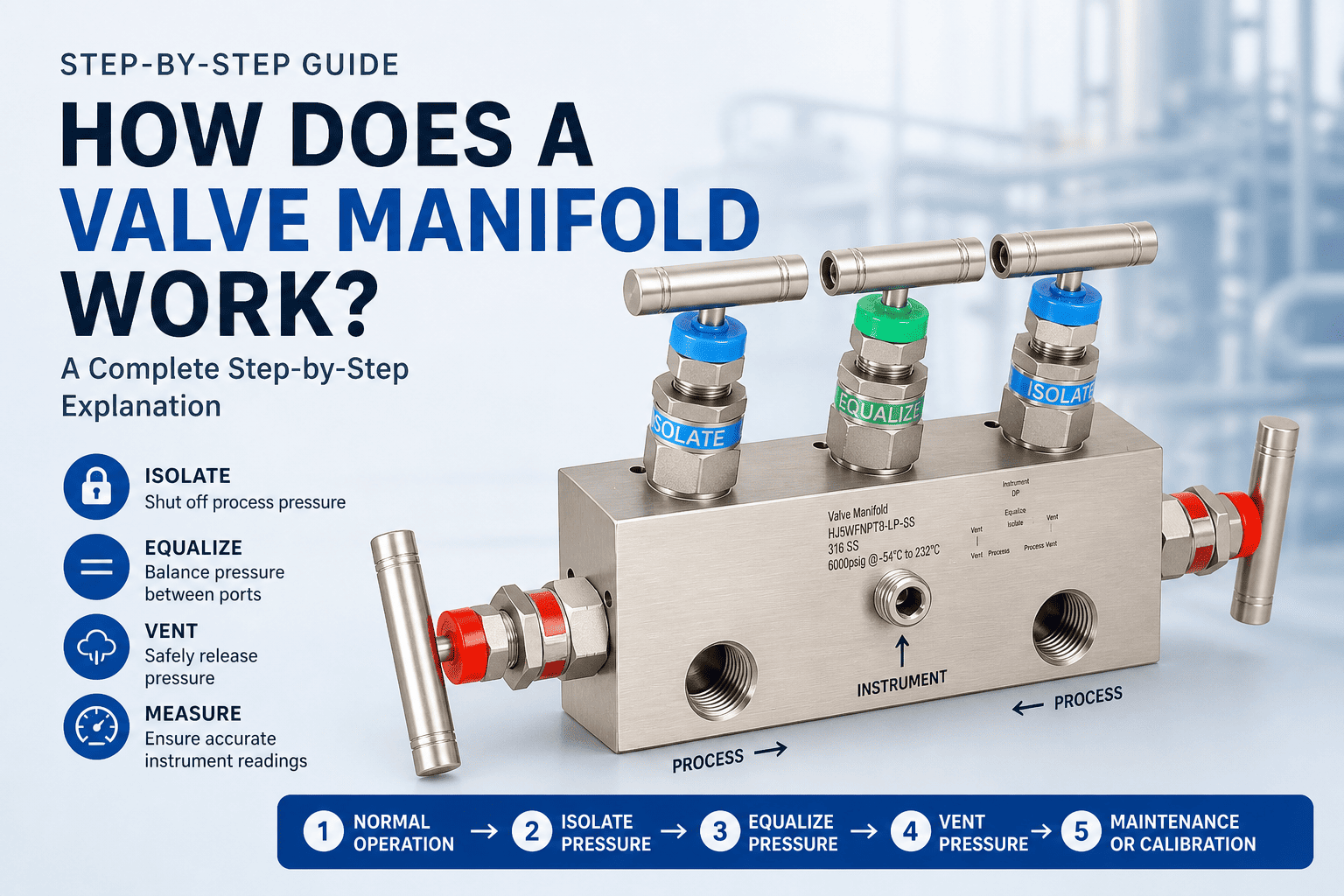
In industrial process control systems, precision and safety are non-negotiable. One of the most essential components ensuring both is the colector de válvulas. Whether used with pressure transmitters, differential pressure instruments, or gauges, valve manifolds simplify installation, improve control accuracy, and enhance system safety.
But how exactly does a manifold valve work?This step-by-step guide explains the working principle, internal flow control, and real-world operation of valve manifolds in a clear and practical way.
What Is a Valve Manifold?
A manifolds valve is a compact assembly of multiple valves integrated into a single block. It is designed to control, isolate, and equalize pressure in instrumentation systems. Instead of installing multiple individual valves and fittings, a manifold consolidates these functions into one unit, reducing leakage points and simplifying system layout.
Typical configurations include:
- 2-valve manifold (isolation + vent)
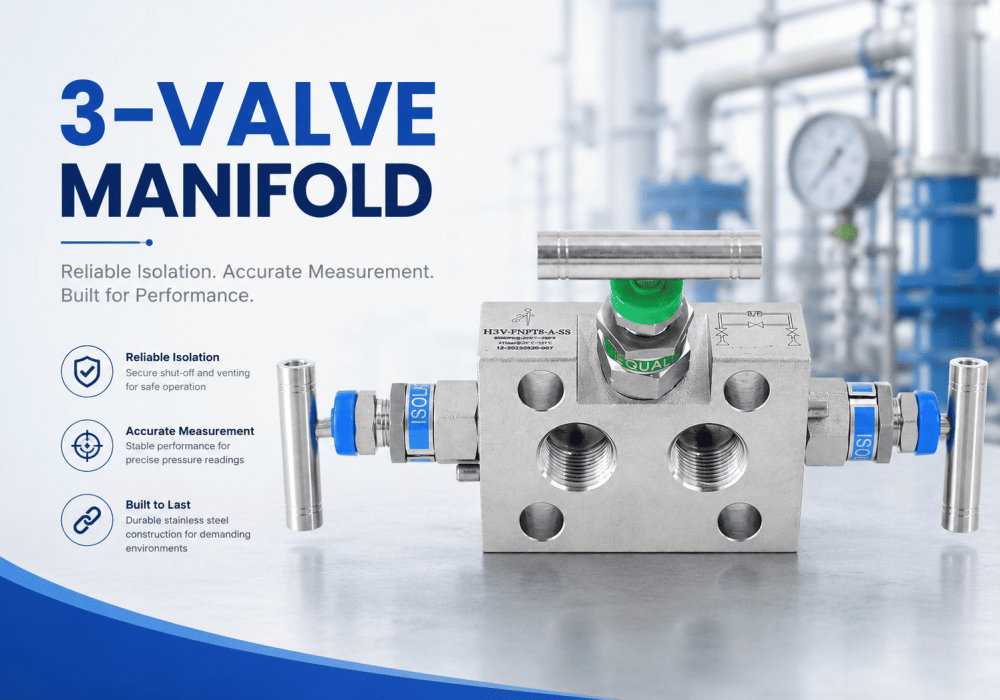
- 3-valve manifold (two isolation + one equalizing)
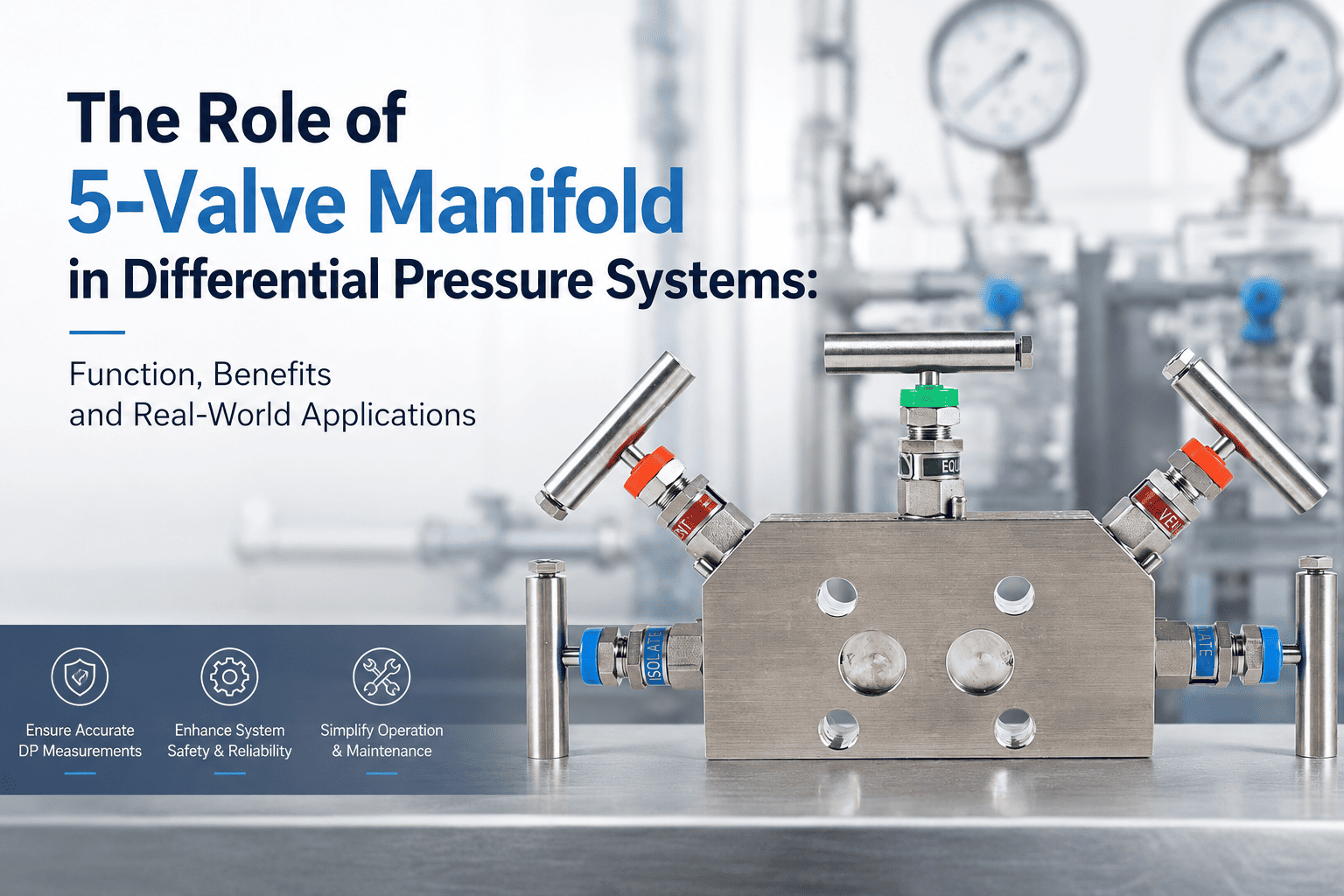
- 5-valve manifold (two isolation + equalizing + two vent valves)
- Core Functions of a Valve Manifold
Before diving into how it works, it’s important to understand what a valve manifold actually does:
- Isolation – Separates the instrument from the process line
- Equalization – Balances pressure between high and low sides
- Vent/Drain – Releases pressure safely for maintenance or calibration
These functions are combined to allow safe operation without shutting down the entire system.
Step-by-Step: How a Valve Manifolds Works?
Let’s walk through a typical working process using a 3-valve or 5-valve manifold connected to a differential pressure transmitter.
Step 1: Normal Operation (Measurement Mode)
In standard operation:
- The high-pressure valve is open
- The low-pressure valve is open
- The equalizing valve is closed
This allows process pressure to flow into both sides of the transmitter. The transmitter then measures the pressure difference between the two sides and sends accurate data to the control system.
Step 2: Closing Isolation Valves (Preparing for Maintenance)
When maintenance or calibration is needed:
First, close both isolation valves (high and low side)
This stops process fluid from entering the transmitter.
At this point, pressure is still trapped inside the instrument.
Step 3: Opening the Equalizing Valve
Next: Open the equalizing valve
This connects the high-pressure and low-pressure sides internally.
Result: Pressure on both sides becomes equal
Differential pressure = zero
This step protects the transmitter from sudden pressure imbalance or damage.
Step 4: Venting or Draining the System
After equalization:
Open the vent or drain valves (if available)
This safely releases any remaining pressure inside the manifold and instrument.
This step ensures:
Safe removal of the transmitter
Zero residual pressure risk
Step 5: Calibration or Removal
Now the system is safe to:
Calibrate the transmitter
Replace or inspect the instrument
All without shutting down the entire process line.
Step 6: Returning to Operation
To bring the system back online:
Close vent/drain valves
Close equalizing valve
Slowly open isolation valves
This gradual process prevents pressure shock and ensures stable readings.
Why Valve Manifolds Improve System Performance?
Stainless steel Valve manifolds are not just about convenience—they directly impact system efficiency and reliability.
- Reduced Leakage Points
Fewer connections mean lower risk of leakage compared to traditional multi-valve setups.
- Compact Design
Saves installation space and reduces piping complexity.
- Improved Safety
Controlled pressure release and isolation reduce operational risks.
- Faster Maintenance
Technicians can isolate and service instruments without shutting down the process.
A high pressure valve manifold works by controlling the flow and balance of pressure between the process line and measurement instruments. Through a simple yet precise sequence—isolate, equalize, vent, and restore—it allows safe operation, accurate measurement, and efficient maintenance. Understanding how a manifold works not only helps improve system reliability but also reduces downtime and operational risks.


 Spanish
  English
  Arabic
  Russian