
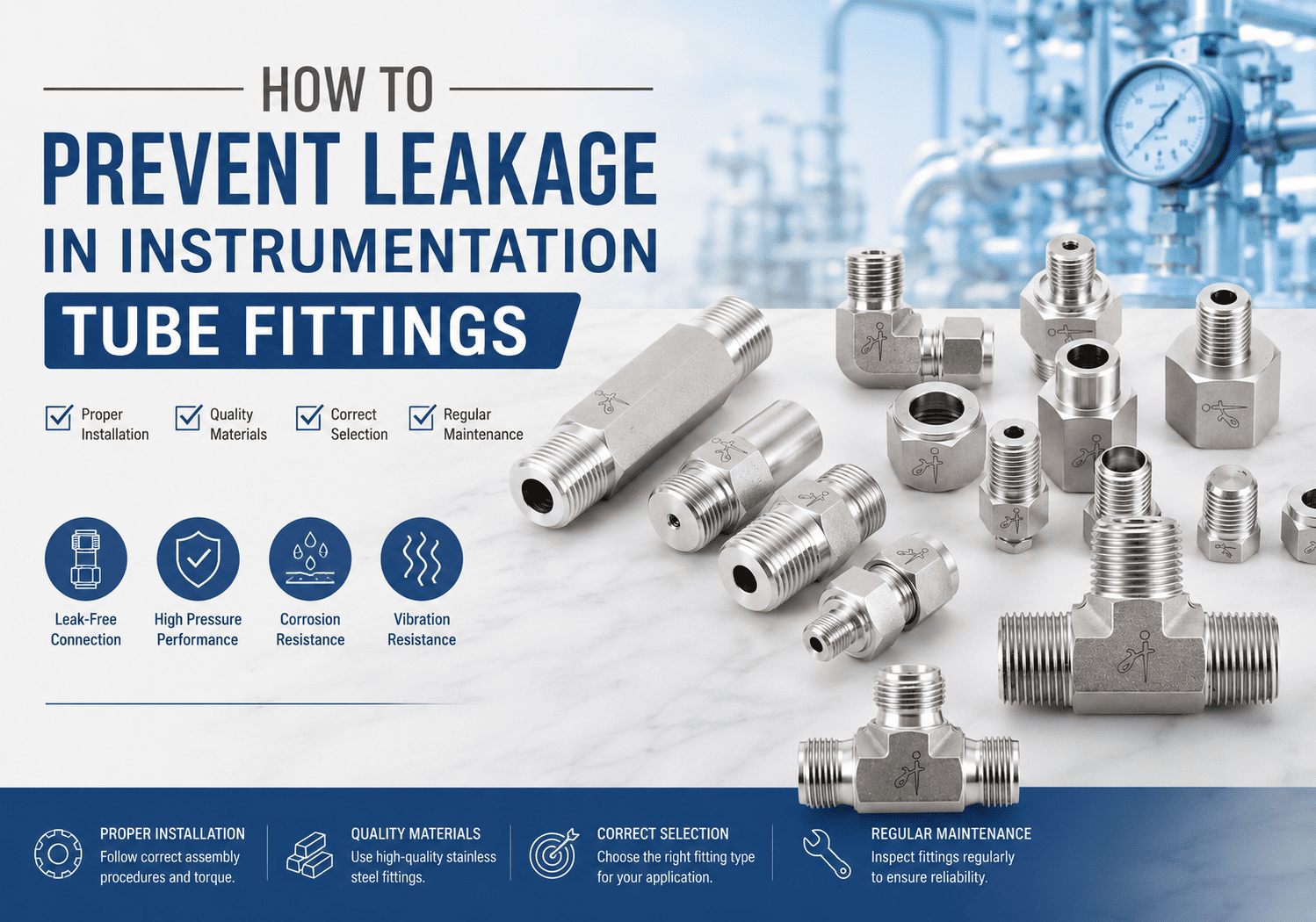
Instrumentation tube fittings are widely used in industries such as oil & gas, chemical processing, power generation, semiconductor manufacturing, and hydraulic systems. A reliable tube fitting connection is critical for maintaining system safety, pressure integrity, and operational efficiency.
However, leakage remains one of the most common issues in instrumentation systems. Even a small leak can lead to pressure loss, contamination, equipment damage, costly downtime, or safety hazards.
In this article, we will discuss the most common causes of leakage in instrumentation tube fittings and share practical solutions to help ensure leak-free performance.
Why Do Instrumentation Tube Fittings Leak?
Tube fitting leakage usually occurs because of improper installation, incorrect fitting selection, poor material compatibility, or vibration in the system.
Understanding these root causes is the first step toward preventing failures.
1. Incorrect Installation of Tube Fittings
Improper installation is one of the leading causes of fitting leakage.
Common mistakes include:
- Under-tightening the fitting
- Over-tightening the fitting
- Misalignment of tubing
- Incomplete insertion of the tube
- Reusing damaged ferrules
When a fitting is not assembled correctly, the ferrules may fail to create a proper seal between the tube and the fitting body. Always follow the manufacturer’s installation instructions carefully. Ensure the tubing is fully inserted into the fitting before tightening the nut. Use the recommended number of turns or torque specifications during installation. Proper installation significantly improves sealing performance and reduces the risk of leaks.
2. Using Low-Quality or Incompatible Tube Fittings
Not all tube fittings are designed for high-pressure or corrosive applications.
Low-quality fittings may have:
- Poor machining accuracy
- Inconsistent ferrule hardness
- Weak sealing performance
- Inferior corrosion resistance
In demanding industrial environments, these issues can quickly lead to leakage.
Why Material Selection Matters
Stainless steel 316 and 316L are commonly used in instrumentation systems because of their excellent corrosion resistance and high strength. For aggressive media or high-pressure applications, double ferrule tube fittings made from high-quality stainless steel provide more reliable sealing and vibration resistance.
3. Choosing the Wrong Ferrule Design
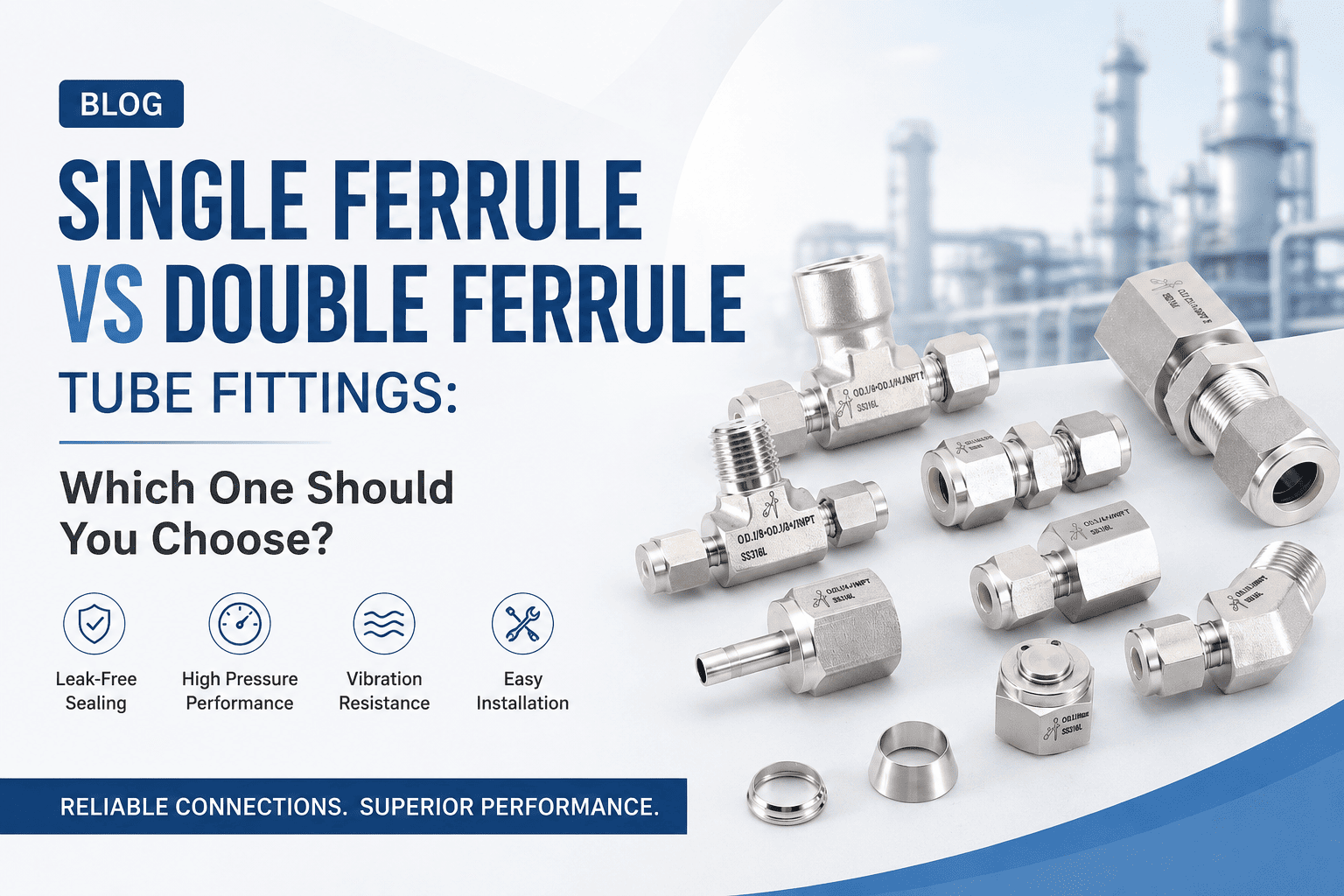
Single ferrule and double ferrule tube fittings have different sealing capabilities.
Single Ferrule Fittings
Single ferrule fittings are simpler in design and generally suitable for low-pressure applications.
Double Ferrule Fittings
Double ferrule fittings provide better tube grip and improved sealing performance. They are widely used in high-pressure instrumentation systems because they can better resist vibration, thermal cycling, and pressure fluctuations.
For critical applications, double ferrule fittings are often the preferred choice.
4. Damaged or Poorly Prepared Tubing
Even the best fitting cannot seal properly if the tubing itself is damaged.
Common tubing issues include:
- Scratches on the tube surface
- Uneven tube cuts
- Out-of-round tubing
- Burrs on tube ends
- Corrosion or contamination
These imperfections prevent the ferrules from sealing evenly around the tubing.
Always use high-quality tubing and proper tube cutting tools. Deburr the tube ends and inspect the tube surface before installation. Clean tubing also helps prevent contamination inside the instrumentation system.
5. Excessive System Vibration
Industrial piping systems often experience vibration from pumps, compressors, or rotating equipment. Continuous vibration can gradually loosen fittings and reduce sealing effectiveness over time.
How to Reduce Vibration-Related Leakage?
- Use proper tube supports and clamps
- Minimize unnecessary tubing movement
- Choose double ferrule fittingsfor vibration resistance
- Regularly inspect fittings in high-vibration areas
A well-supported tubing system can greatly extend fitting service life.
6. Operating Beyond Pressure or Temperature Limits
Every instrumentation fitting has a designed pressure and temperature range.
Using fittings outside these limits may cause:
- Seal deformation
- Material fatigue
- Thread damage
- Permanent leakage
- Best Practice
Always verify the fitting specifications before installation. Ensure the fitting material, pressure rating, and temperature range match the application requirements. For high-pressure systems, selecting fittings specifically designed for instrumentation service is essential.
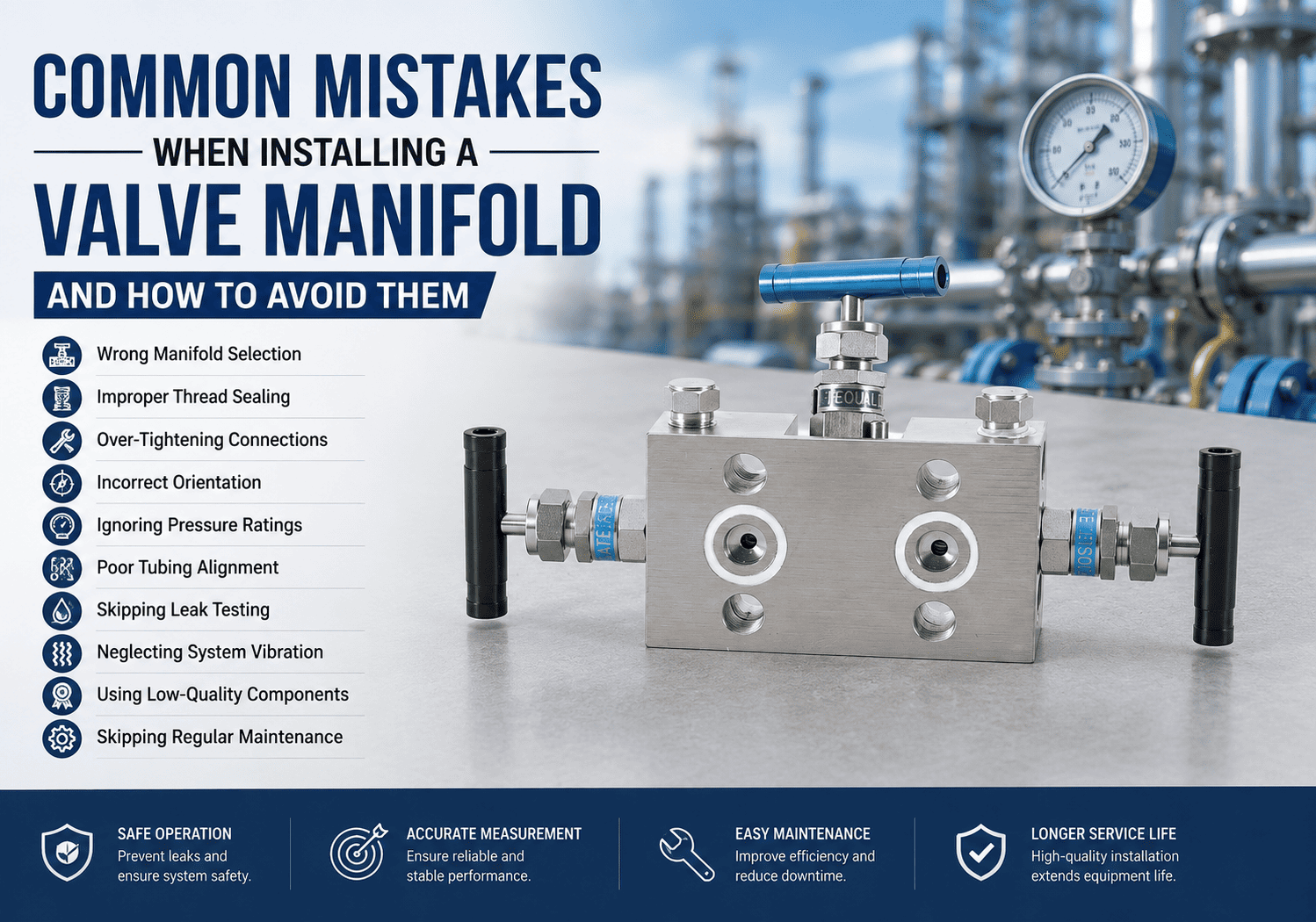
7. Improper Thread Sealing
Leakage can also occur at threaded connections if thread sealing is done incorrectly.
Common problems include:
- Using excessive thread sealant
- Applying sealant unevenly
- Damaged threads
- Mixing incompatible thread standards
Use the correct thread type and approved sealing materials. Inspect threads carefully before assembly to ensure a secure connection. Importance of Regular Inspection and Maintenance Even properly installed tube fittings should be inspected regularly.
Routine maintenance helps identify:
- Loose fittings
- Corrosion
- Mechanical wear
- Vibration damage
- Early-stage leakage
Preventive maintenance can reduce downtime and improve overall system reliability.
Why High-Quality Instrumentation Tube Fittings Matter
High-quality instrumentation tube fittings provide:
- Reliable leak-free sealing
- Better pressure resistance
- Improved vibration performance
- Longer service life
- Reduced maintenance costs
For industrial instrumentation systems, investing in reliable stainless steel tube fittings helps improve operational safety and efficiency. Preventing leakage in instrumentation tube fittings requires proper installation, correct material selection, high-quality components, and regular maintenance. By choosing reliable double ferrule tube fittings, using proper installation procedures, and maintaining the system regularly, industrial users can significantly reduce leakage risks and improve system performance. Whether used in oil and gas, chemical processing, power plants, or instrumentation control systems, leak-free tube fitting connections are essential for safe and efficient operation.
 Spanish
  English
  Arabic
  Russian