
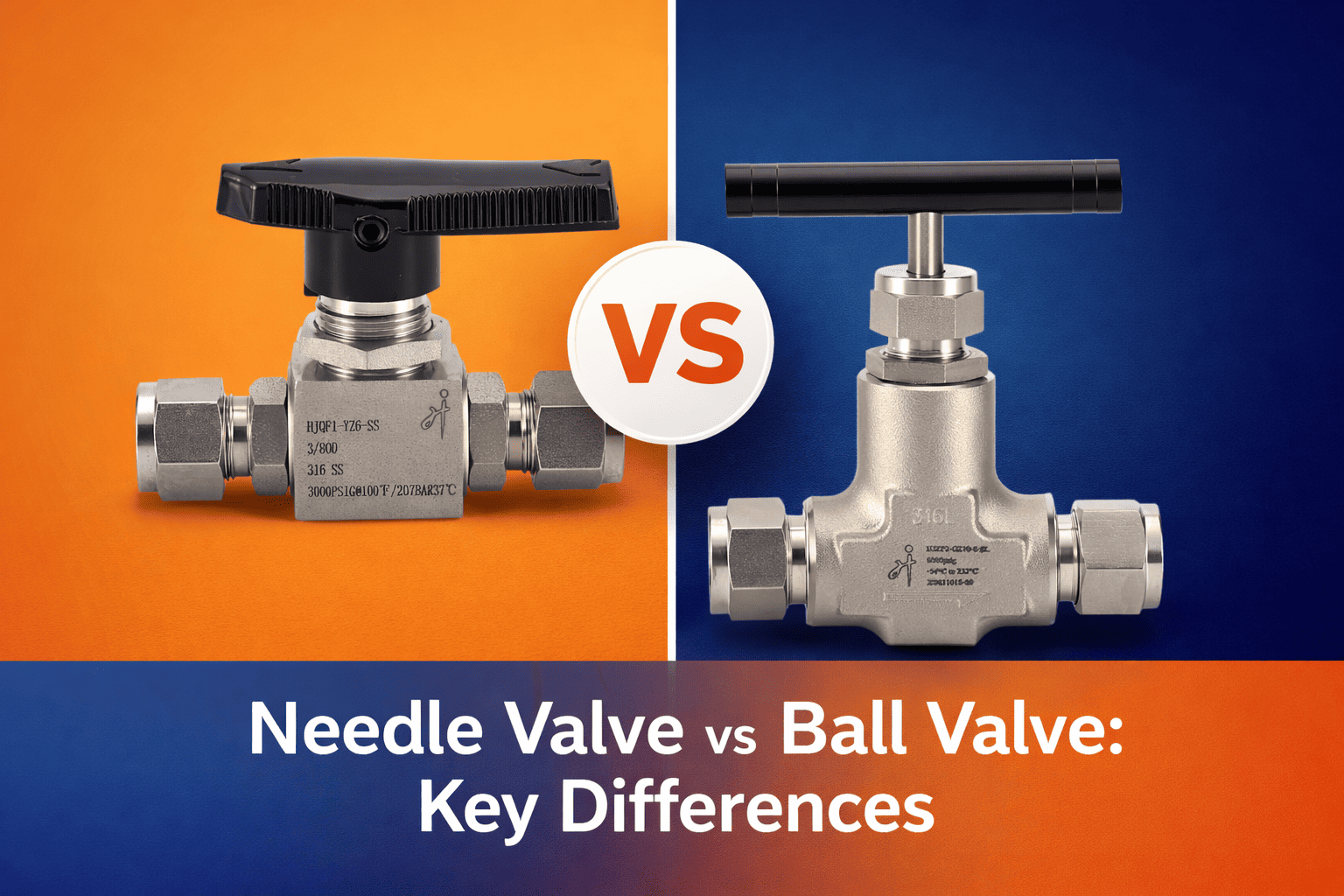
In industrial fluid systems, selecting the right valve is not just a technical decision—it directly affects system stability, safety, and performance. Among the many valve types available, needle valves and ball valves are two of the most widely used. Although they both serve the purpose of controlling fluid flow, their design philosophies and practical uses are quite different. Today we will show you needle valve vs ball valve whats the key differences
Understanding how these two valves work and where each performs best can help engineers and buyers make more informed decisions, especially in applications involving pressure control, instrumentation, and process systems.
Understanding Игольчатые клапаны
A needle valve is specifically designed for situations where precision matters more than speed. Its internal structure features a long, tapered needle-like stem that gradually fits into a matching seat. This design allows operators to adjust flow in a very controlled and incremental way.
Because of this fine control capability, needle valves are commonly found in instrumentation systems, where even a small change in flow rate can affect measurement accuracy. In pressure measurement lines, sampling systems, and calibration setups, the ability to make subtle adjustments is essential. Rather than opening or closing quickly, a needle valve allows the user to “dial in” the exact flow needed.
This level of control makes it particularly valuable in high-pressure environments where stability and precision are more important than speed.
Understanding Ball Valves
In contrast, a шаровой клапан is built for efficiency and quick operation. It uses a spherical ball with a hole through its center, and flow is controlled simply by rotating the ball. When the hole aligns with the pipeline, fluid flows freely; when it is turned perpendicular, the flow stops almost instantly.
This straightforward mechanism makes ball valves extremely reliable for on/off control. They are widely used in pipelines, oil and gas systems, water distribution, and many general industrial applications where rapid shut-off is required.
Unlike needle valves, ball valves are not designed for fine adjustments. Instead, they excel in situations where the goal is either full flow or complete isolation, with minimal resistance and pressure drop.
Needle Valve vs Ball Valve Key Differences in Performance and Function
Needle Valve vs Ball Valve The most important distinction between needle valves and ball valves lies in how they control flow. A needle valve allows for gradual, highly precise regulation, making it suitable for low flow rates and sensitive systems. A ball valve, on the other hand, is optimized for quick action and is better suited for handling larger volumes of fluid.
Needle Valve vs Ball Valve difference also affects how each valve is operated. Needle valves typically require multiple turns to open or close, which gives the operator more control but takes more time. Ball valves operate with a simple quarter-turn, making them much faster and easier to use in emergency or shut-off scenarios.
Needle Valve vs Ball Valve Sealing performance is another area where the two diverge. Ball valves are known for providing tight shut-off with very low leakage, which is why they are often used for isolation purposes. Needle valves can also seal effectively, but their primary strength is not absolute shut-off—it is controlled throttling.
In terms of application environments, needle valves are more commonly associated with instrumentation and precision systems, while ball valves are found in broader industrial settings where durability and efficiency are key priorities.
Choosing the Right Valve for Your Application
The choice between a needle valve and a ball valve ultimately depends on what your system requires. If your priority is accurate flow control, especially in low-flow or high-precision environments, a needle valve is usually the better option. It allows for careful adjustment and helps maintain system stability.
On the other hand, if your system requires fast response, full flow capacity, or reliable shut-off, a ball valve is the more practical solution. Its simple design and ease of operation make it ideal for general-purpose use and high-flow applications.
In many real-world systems, these two valves are not competing choices but complementary components. For example, a ball valve may be used to isolate a section of a pipeline, while a needle valve is installed downstream to fine-tune the flow. This combination is especially common in pressure measurement and sampling systems.
Needle valves and ball valves each play a distinct role in industrial fluid control. While they may appear similar at a glance, their differences in design, operation, and application make them suitable for very different tasks.
Choosing the right valve is not about which one is better overall, but about which one fits your specific needs. By understanding how each valve functions and where it performs best, you can improve system efficiency, ensure safety, and achieve more reliable results.
If you are selecting valves for instrumentation systems, pressure measurement setups, or industrial pipelines, choosing the right type is essential for long-term performance.
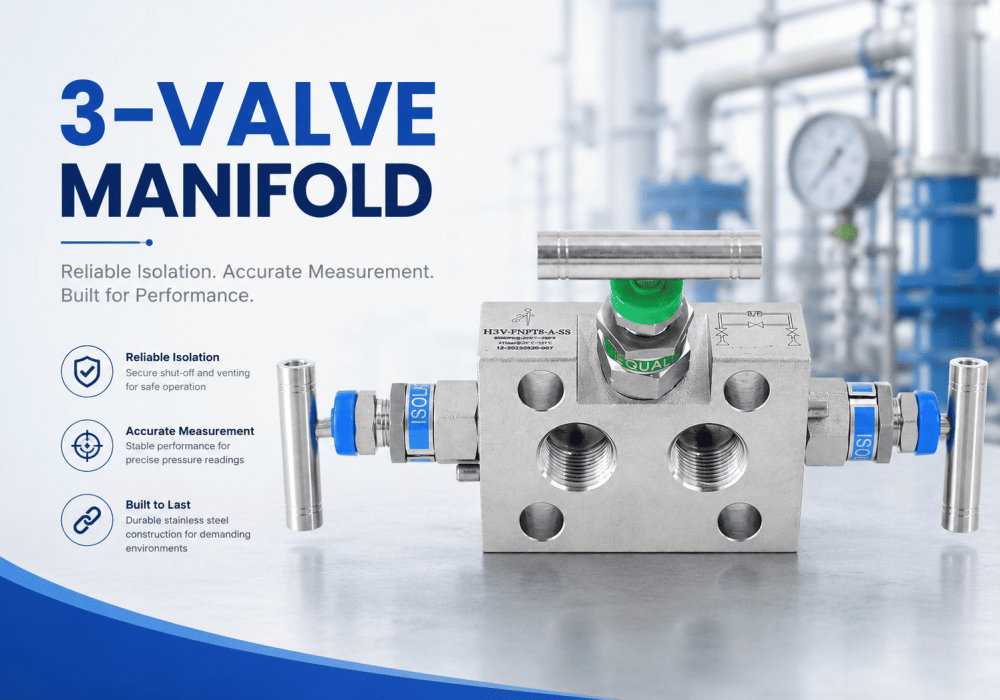
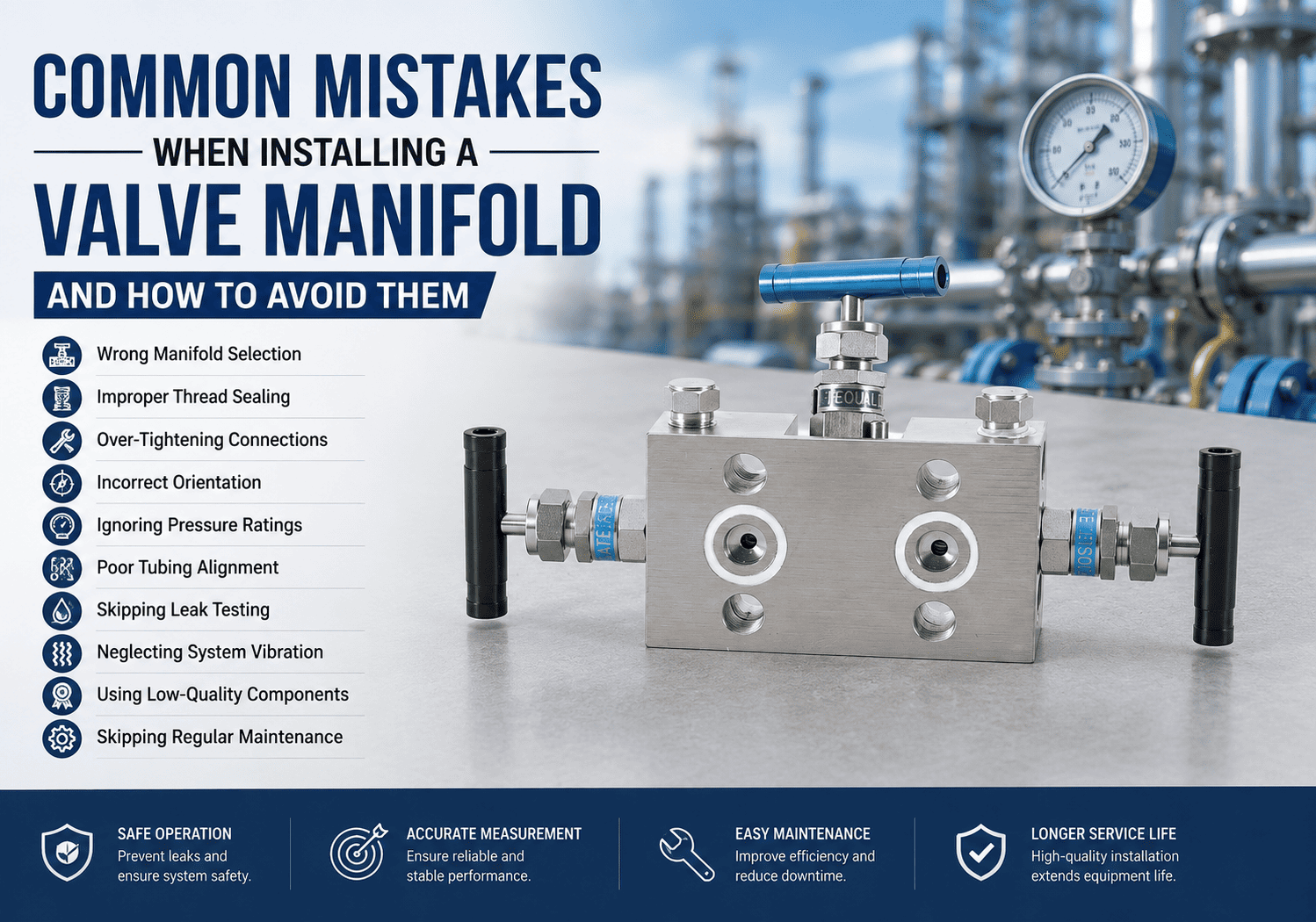
You can explore a full range of needle valves, ball valves, and valve manifolds on our website, or reach out to our team for more tailored recommendations based on your application.
 Russian
  English
  Arabic
  Spanish