

In modern fluid and gas systems, especially those handling high purity, high pressure, or hazardous media, connection integrity is just as critical as valve performance. One solution trusted across semiconductor, laboratory, and analytical industries is the High Precision Stainless Steel VCO fittings. Designed for metal-to-metal sealing, VCO fittings provide ultra-clean, leak-tight connections where reliability cannot be compromised.
This article explains what VCO fittings are, how they work, and why stainless steel VCO fittings are the preferred choice for demanding applications.
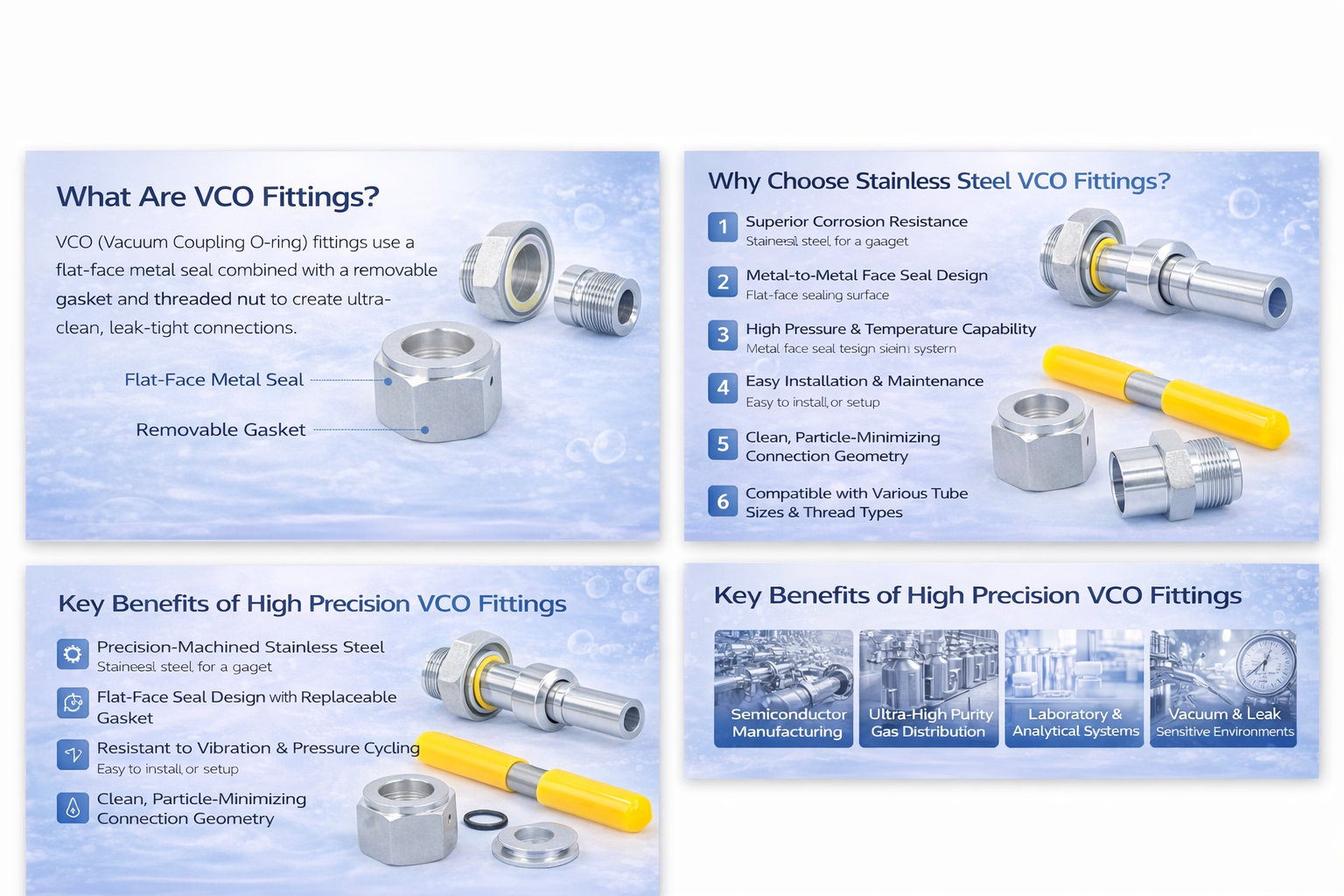
What Are VCO Fittings?
VCO (Vacuum Coupling O-Ring) fittings are a type of face-seal fitting that creates a tight seal using a gasket compressed between two flat metal surfaces. Unlike traditional compression fittings that rely on ferrules, VCO fittings use a flat-face seal combined with a threaded nut to achieve consistent, repeatable sealing performance.
This design eliminates potential leak paths caused by ferrule deformation and makes VCO fittings ideal for systems requiring frequent assembly and disassembly.
Why Choose Stainless Steel VCO Fittings?
- Superior Corrosion Resistance
High-grade stainless steel, typically 316 or 316L, provides excellent resistance to corrosion, oxidation, and chemical attack. This ensures long service life even in aggressive environments such as chemical processing, offshore installations, and ultra-high-purity gas systems.
- Metal-to-Metal Face Seal Design
The flat-face sealing surface allows for uniform gasket compression, resulting in highly reliable leak-tight performance. This design also reduces the risk of particle generation, making VCO fittings suitable for cleanroom and semiconductor applications.
- High Pressure and Temperature Capability
Stainless steel VCO fittings are engineered to withstand elevated pressures and wide temperature ranges, depending on gasket material selection. This makes them suitable for both cryogenic and high-temperature systems.
- Easy Installation and Maintenance
VCO fittings are easier to assemble compared to compression fittings because there is no need to set ferrules. The gasket can be visually inspected and replaced, making maintenance faster and reducing the risk of improper installation.
High precision stainless steel VCO fittings are widely used in: Semiconductor manufacturing systems;Ultra-high purity gas distribution;Laboratory and analytical instrumentation;Hydrogen and specialty gas lines;Vacuum and leak-sensitive environments. In these applications, even a minor leak or contamination can compromise safety, performance, or product quality — making VCO fittings a preferred solution.
VCO Fittings vs. Compression Fittings
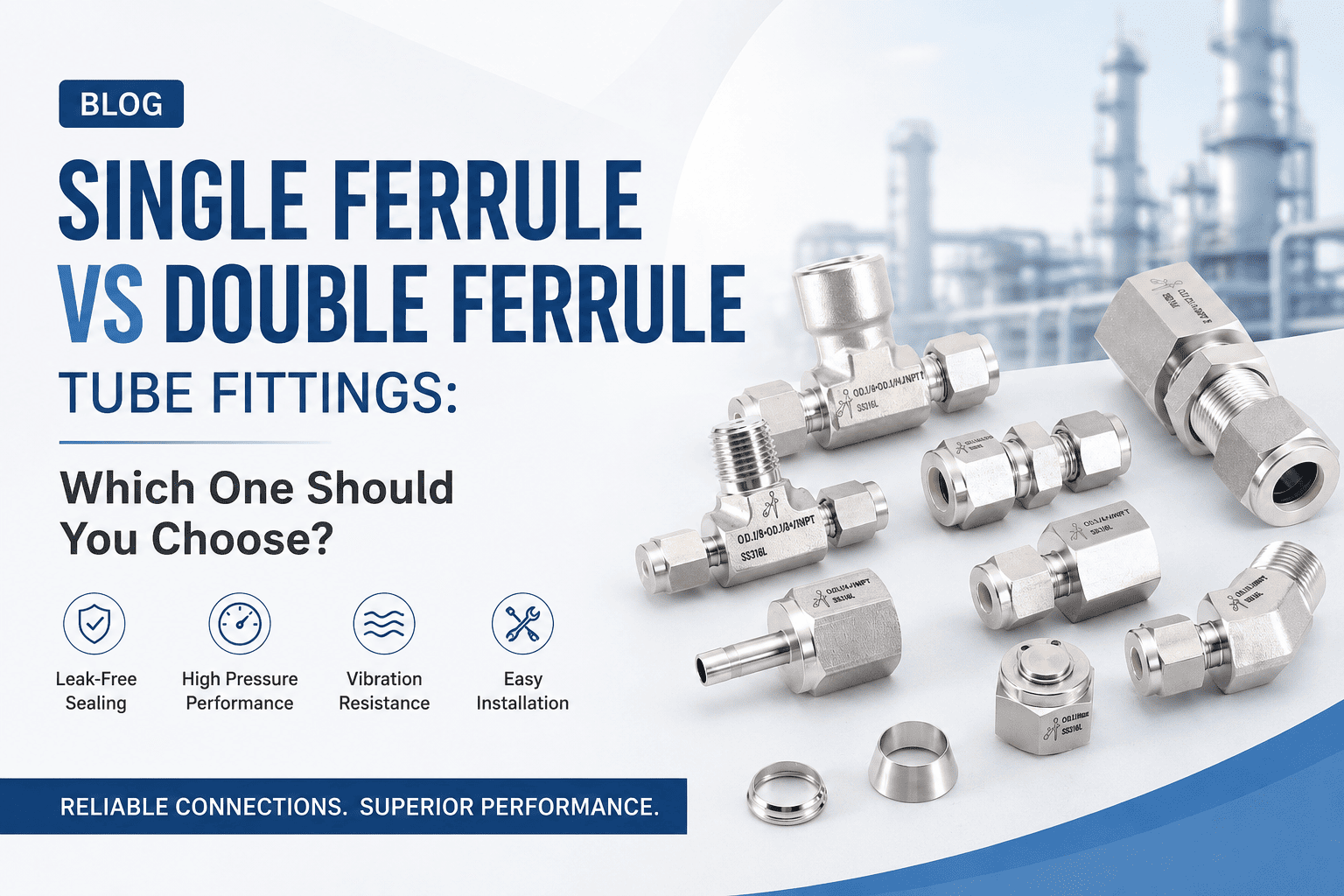
While compression fittings are commonly used in general industrial piping, VCO fittings offer advantages in clean and high-performance environments. The flat-face seal reduces installation variability and improves sealing reliability, especially where frequent maintenance or reconfiguration is required.
For systems where cleanliness, repeatability, and leak integrity are critical, stainless steel VCO fittings provide a clear performance advantage.
High precision VCO fittings deliver exceptional sealing performance, durability, and cleanliness in demanding fluid and gas systems. Their metal face-seal design, corrosion-resistant construction, and ease of maintenance make them an ideal choice for high-purity, high-pressure, and vacuum applications. By selecting the right fitting technology, engineers can improve system reliability, reduce maintenance time, and ensure long-term operational safety.
 Arabic
  English
  Spanish
  Russian