
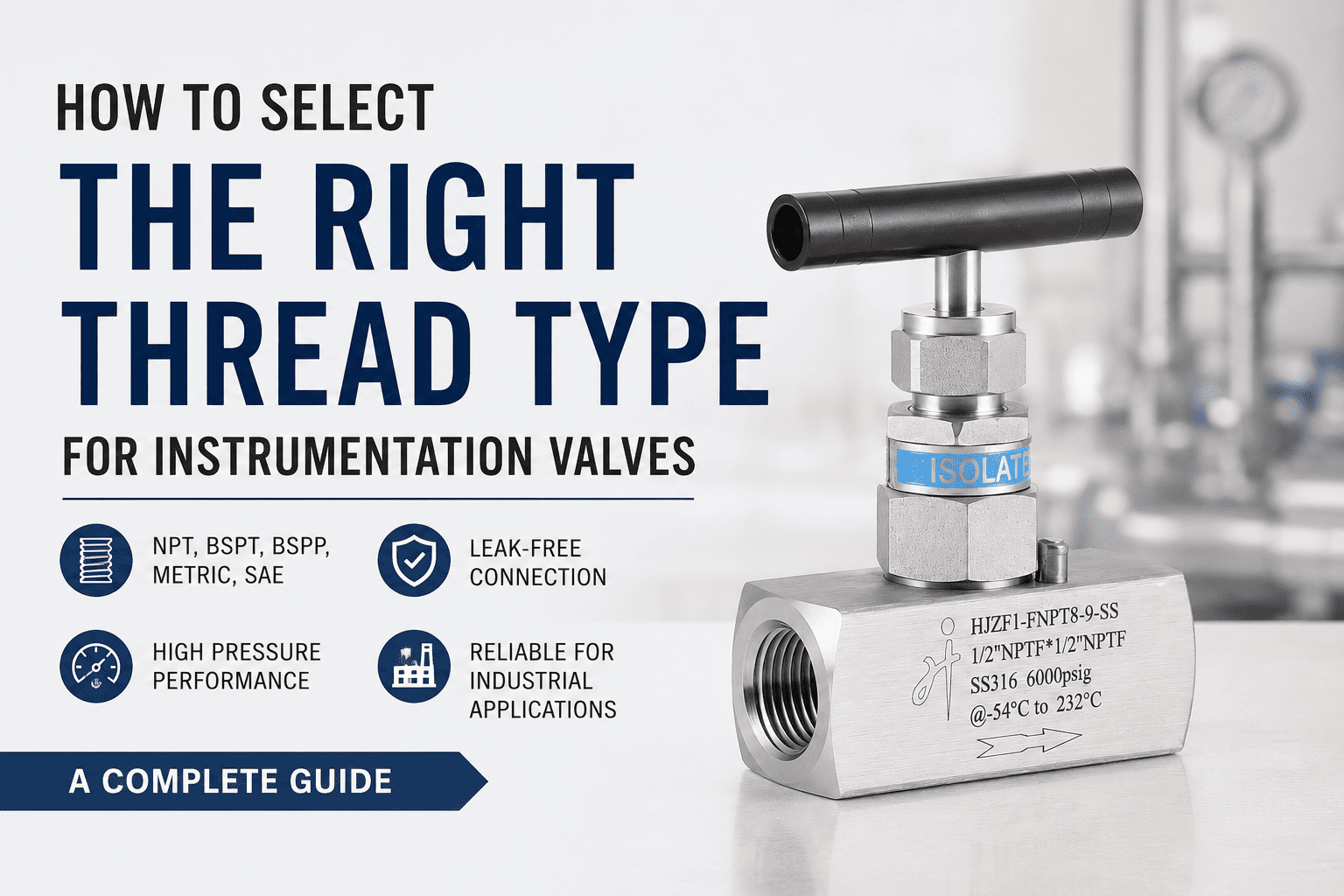
Selecting the correct thread type is one of the most important decisions when specifying instrumentation valves. Even if a valve is manufactured from high-quality stainless steel and designed for high-pressure service, using the wrong thread connection can result in leakage, installation difficulties, equipment damage, and costly downtime.
With multiple thread standards available worldwide—including NPT, BSPT, BSPP, ISO Metric, and SAE—engineers and buyers often face uncertainty when choosing the right connection.
This guide explains the most common thread types used in instrumentation valves, their differences, and how to select the best option for your application.
Why Thread Type Matters?
Threaded connections provide the mechanical and pressure-tight connection between instrumentation valves, fittings, tubing, and process equipment.
Selecting the wrong thread type may lead to:
- Leakage under pressure
- Cross-threading during installation
- Damaged valve ports
- Poor sealing performance
- Increased maintenance costs
- Safety hazards
Choosing the correct thread standard ensures long-term system reliability and safe operation.
The Most Common Thread Types
1.NPT (National Pipe Thread): NPT is one of the most widely used thread standards in North America.
سمات:
- Tapered thread
- Creates a seal by thread interference
- Typically requires PTFE tape or thread sealant
- Excellent for high-pressure industrial applications
Common Applications
- Instrumentation valves
- Needle valves
- Ball valves
- Pressure gauges
- Hydraulic systems
Advantages
- Widely available
- Reliable sealing
- Suitable for high-pressure service
2.BSPT (British Standard Pipe Taper): BSPT threads are common in Europe, Asia, Australia, and many international markets.Like NPT, BSPT uses tapered threads but has a different thread angle and pitch.
سمات:
Tapered thread
Requires thread sealant
Good sealing capability
Typical Industries
- النفط والغاز
- Petrochemical
- معالجة المياه
- Power Plants
3.BSPP (British Standard Pipe Parallel): Unlike NPT and BSPT, BSPP uses parallel threads.It does not seal through the threads themselves. Instead, sealing is achieved using an O-ring, bonded washer, or gasket.
سمات:
- Parallel thread
- Excellent repeatability
- Easy maintenance
- Lower installation torque
التطبيقات
- Hydraulic equipment
- Instrumentation panels
- OEM equipment
- Pressure transmitters
4.ISO Metric Threads: Metric threads are widely used in Europe and many international manufacturing industries.These threads are specified by their outside diameter and thread pitch, such as M20 × 1.5.
Advantages
- International standard
- Easy identification
- Common in OEM machinery
5.SAE Straight Threads (UNF/ORB): SAE straight threads are commonly found in hydraulic systems.Unlike tapered threads, sealing is achieved by an O-ring rather than the thread itself.
Advantages:
- Excellent leak resistance
- Easy assembly
- High reliability
- Suitable for repeated installation
Common Mistakes When Selecting Thread Types
1.Mixing NPT and BSP Threads
Although they appear similar, NPT and BSP threads are not interchangeable Differences in thread angle and pitch prevent proper sealing and may permanently damage valve ports.
2.Ignoring Pressure Requirements
Some thread types are better suited for high-pressure systems than others.Always verify the pressure rating before selecting a valve connection.
3.Using Incorrect Thread Sealant
Not every threaded connection requires PTFE tape.
For example:
* BSPP uses O-ring sealing.
* SAE ORB uses O-ring sealing.
* Excessive sealant may contaminate instrumentation systems.
4.Selecting Threads Based Only on Availability
Many buyers simply choose the thread that is easiest to source locally. However, compatibility with the existing piping system should always be the primary consideration.
How to Choose the Right Thread Type
Consider the following questions before selecting an instrumentation valve:
What thread standard does your existing piping system use?
Matching the existing system simplifies installation and reduces the risk of leakage.
What is the operating pressure?
High-pressure systems require thread types designed for reliable sealing under pressure.
Is repeated maintenance expected?
Parallel thread connections with O-ring sealing are often easier to disassemble and reinstall.
Which international standard does your project follow?
Different industries and regions have preferred thread standards.
Selecting the correct thread type is essential for achieving safe, leak-free, and reliable instrumentation systems. Whether your project requires NPT, BSPT, BSPP, Metric, or SAE threads, understanding the differences will help you avoid installation problems and improve long-term performance.
When purchasing pressure instrumentation valves, always verify thread compatibility, pressure ratings, and sealing methods before installation. The right thread connection not only protects your equipment but also ensures the efficiency and safety of your entire process system.


 Arabic
  English
  Spanish
  Russian