

Stainless steel needle valves may look small, but their role in fluid-control systems is irreplaceable. Whenever a system requires precise, stable, and gradual regulation of flow, a needle valve is usually the best answer. Whether you are working with gas sampling lines, high-pressure hydraulic circuits, laboratory instruments, or petrochemical measurement systems, understanding how these valves work will help you choose the right one for long-term performance.
In this guide, we explain what a stainless steel needle valve is, how it works, why stainless steel matters, and how to select the right type for your application.
What Is a Stainless Steel Needle Valve?
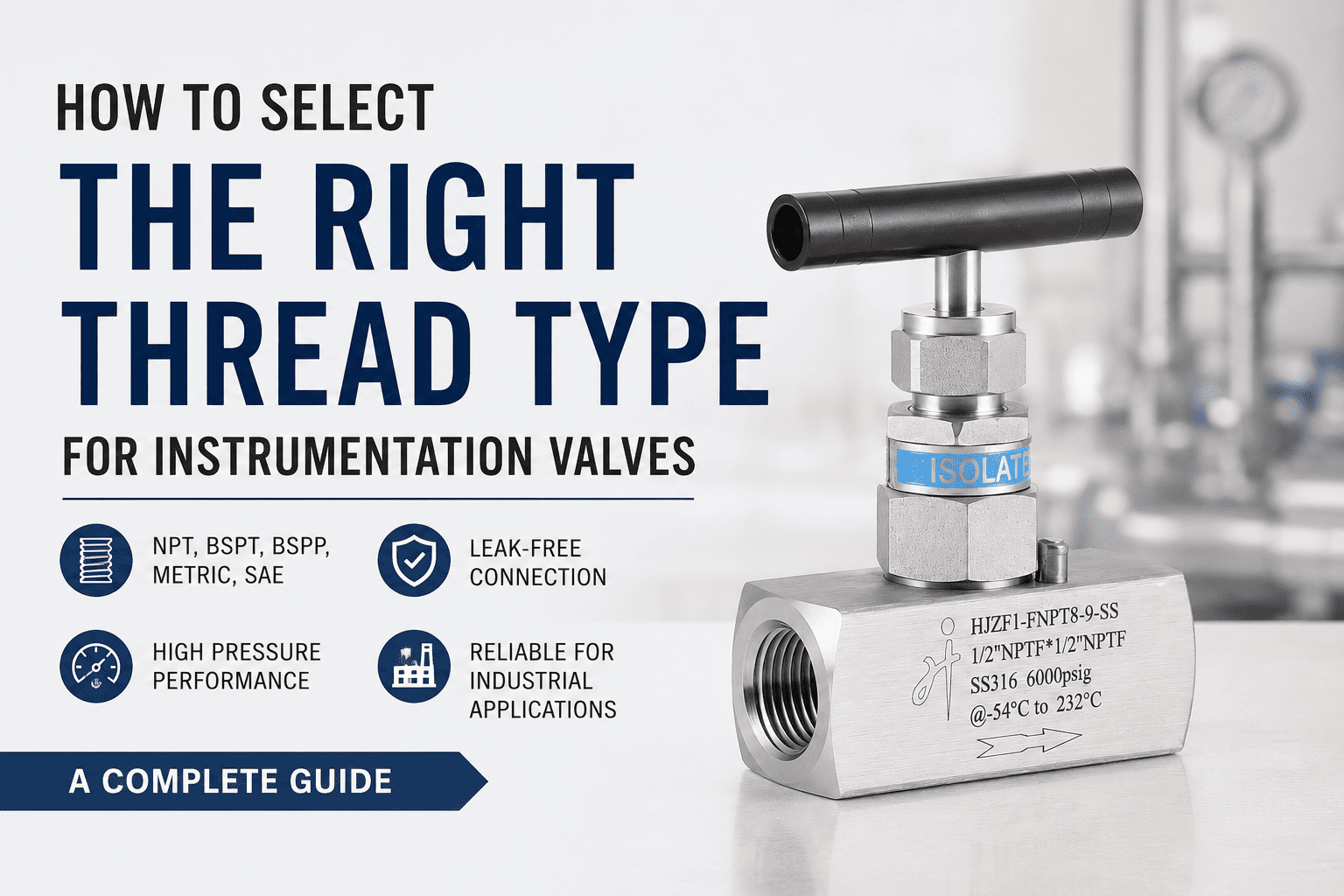
A stainless steel needle valve is a small, manually operated flow-control device designed to adjust liquid or gas flow with high precision. The trademark feature is its needle-shaped stem: a slim, tapered point that moves into or out of a small orifice to gradually control fluid passage. Compared with ball valves or gate valves, needle valves provide much finer throttling capability, making them ideal for calibration, sampling, and flow balancing.
How Does a Needle Valve Work?
- The operating principle is simple but extremely effective:
- Turning the stem (handwheel or T-handle) causes the needle to move up or down.
- As the needle lowers, it enters the valve seat and reduces the opening diameter.
- The smaller the opening, the lower the flow rate — enabling micro-adjustments.
- When fully seated, the needle provides a bubble-tight metal-to-metal shutoff.
This design allows operators to regulate flow gradually, avoid sudden pressure spikes, and ensure precise control in systems with high pressure or sensitive measurements.
Why Stainless Steel Is the Best Material Choice
Stainless steel, especially grades like 304 and 316/316L, is the preferred material for industrial needle valves due to its:
- Corrosion Resistance
Stainless steel withstands moisture, chemicals, acids, and aggressive media that would quickly damage brass or carbon steel valves.
- High-Pressure Performance
Many stainless steel needle valves can handle 6,000 psi, 10,000 psi, and even 20,000 psi in ultra-high-pressure applications.
- Temperature Stability
From cryogenic conditions to elevated temperatures, stainless steel maintains strength and sealing quality.
- Long Service Life
Because it resists wear, pitting, and surface corrosion, stainless steel valves require less maintenance and provide stable operation over time.
Common Types of Stainless Steel Needle Valves
Different designs serve different installation and pressure requirements. The most common types include:
Straight-Type Needle Valve
The inlet and outlet are aligned for straightforward inline installation.
Angle-Type Needle Valve
Changes the flow direction by 90°, reducing the number of pipe fittings needed.
Block & Bleed Needle Valve
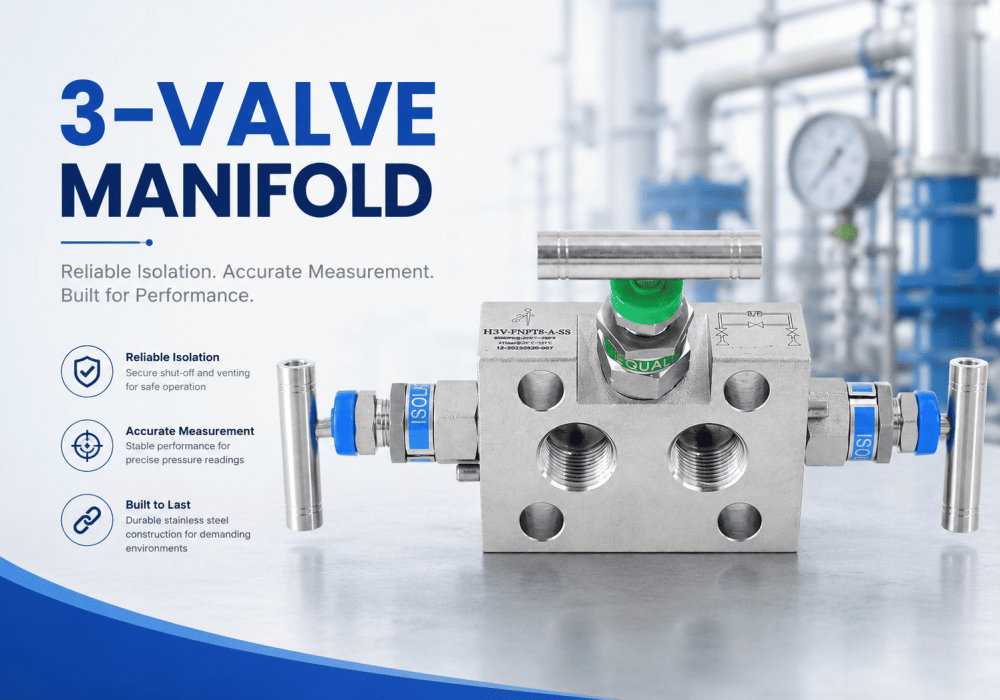
Integrates shutoff and venting functions—commonly used in pressure measurement systems.
✔ Integral-Bonnet Needle Valve
A compact design ideal for vibration-prone environments.
Union-Bonnet Needle Valve
Allows easier maintenance and access to internal components.
High-Pressure Needle Valve (15,000–20,000 psi)
Made for hydraulic test benches, waterjet equipment, and industrial pressure systems.
Stainless steel needle valve play a vital role in modern industrial systems where accuracy, reliability, and material durability are essential. Whether you’re designing a new fluid-control setup or selecting components for a high-pressure instrumentation line, understanding how these valves work helps you make smarter decisions and improve system performance.


 English
  Arabic
  Spanish
  Russian