

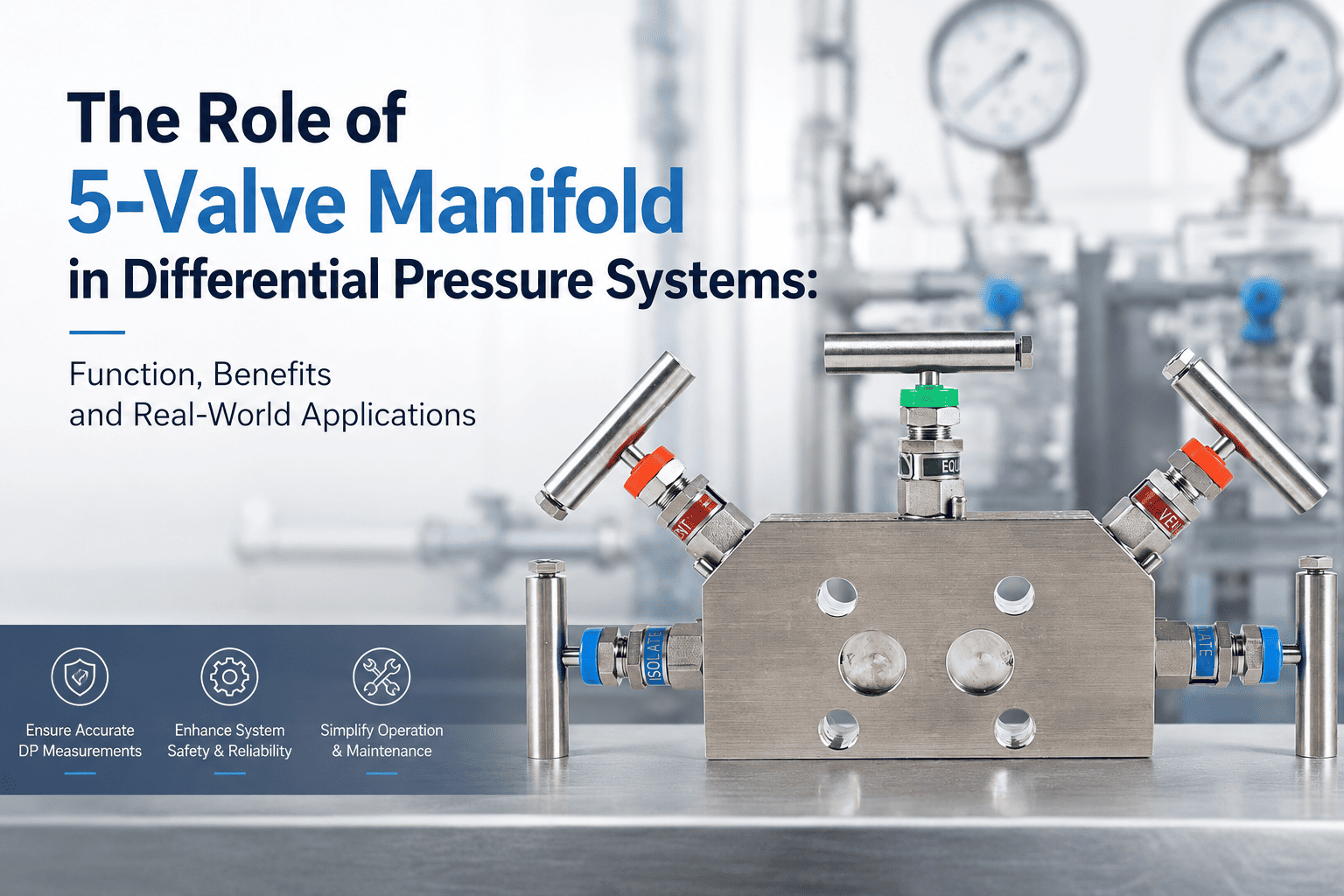
In modern industrial instrumentation, accuracy, safety, and reliability are no longer optional—they are essential. As process systems become more complex and operating conditions more demanding, stainless steel 5 way manifolds have emerged as a critical component for precise pressure measurement and control. Designed specifically for differential pressure transmitters, these manifolds integrate multiple functions into a single compact unit, simplifying installation while significantly improving system safety and measurement stability.
What Is a Stainless Steel 5 Way Manifold?
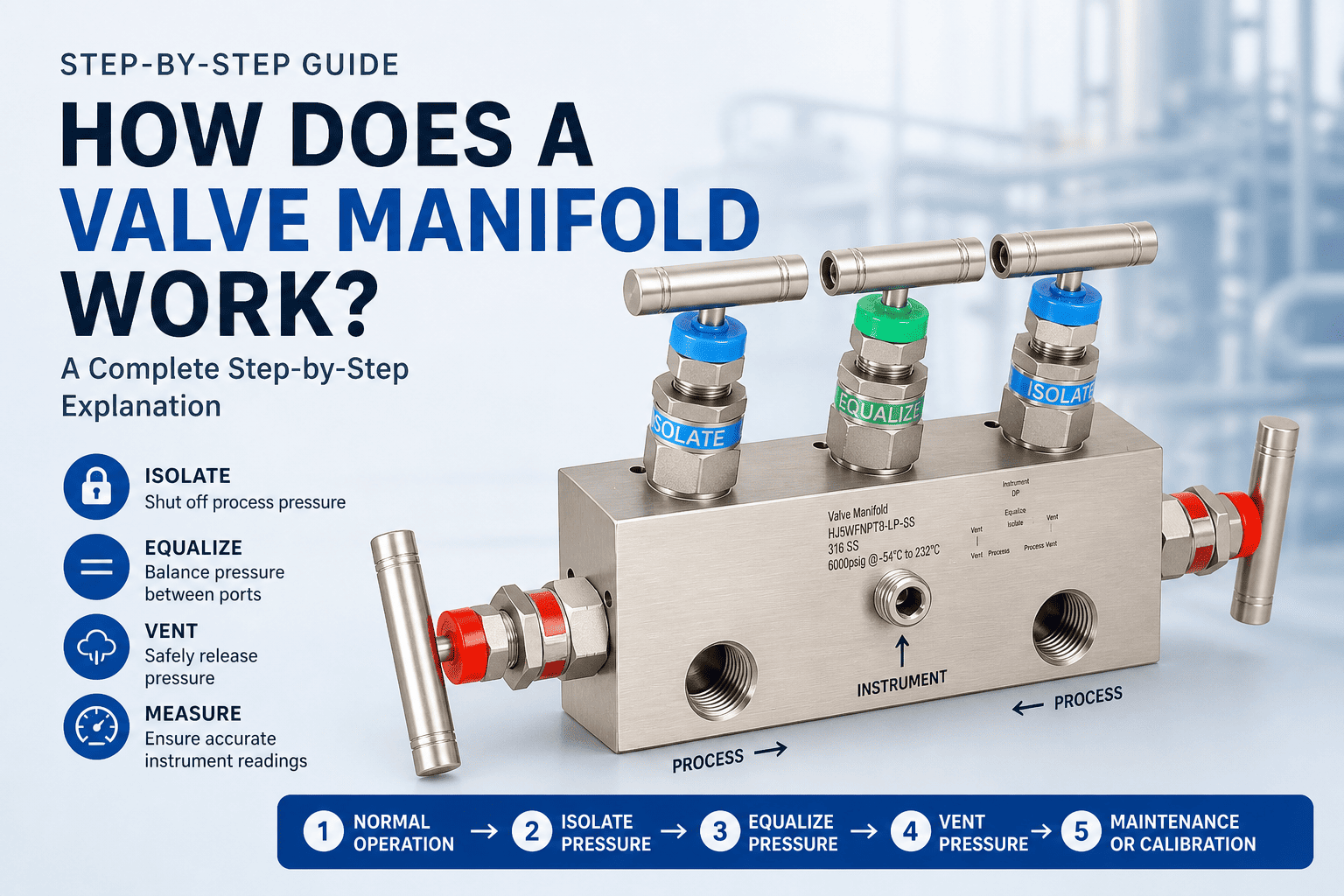
A stainless steel 5 way manifold combines two block valves, one equalizing valve, and two vent valves into one precision-engineered assembly. This configuration allows operators to isolate high and low pressure lines, equalize pressure during calibration, and safely vent trapped media without disconnecting the transmitter or shutting down the process. By reducing the number of separate fittings and potential leak points, the manifold enhances both operational efficiency and long-term reliability.
Material choice plays a decisive role in performance, and stainless steel remains the preferred option for demanding applications. Grades such as SS304, SS316, and SS316L offer excellent resistance to corrosion, pressure fatigue, and extreme temperatures. This makes stainless steel 5 way manifolds particularly suitable for oil and gas installations, chemical and petrochemical plants, power generation facilities, and other environments where aggressive media and high pressures are common. Their robust construction ensures stable operation over long service life, even under continuous load.
From a measurement perspective, the benefits are equally significant. Stainless steel 5 way manifolds help protect sensitive pressure transmitters from pressure shocks during startup and maintenance, while enabling accurate zero calibration through controlled pressure equalization. The inclusion of dual vent valves provides an added layer of safety, allowing pressure to be released in a controlled manner before servicing. As a result, operators gain more reliable readings, improved repeatability, and reduced risk of instrument damage.
How a 5 Way Manifold Improves Measurement Accuracy
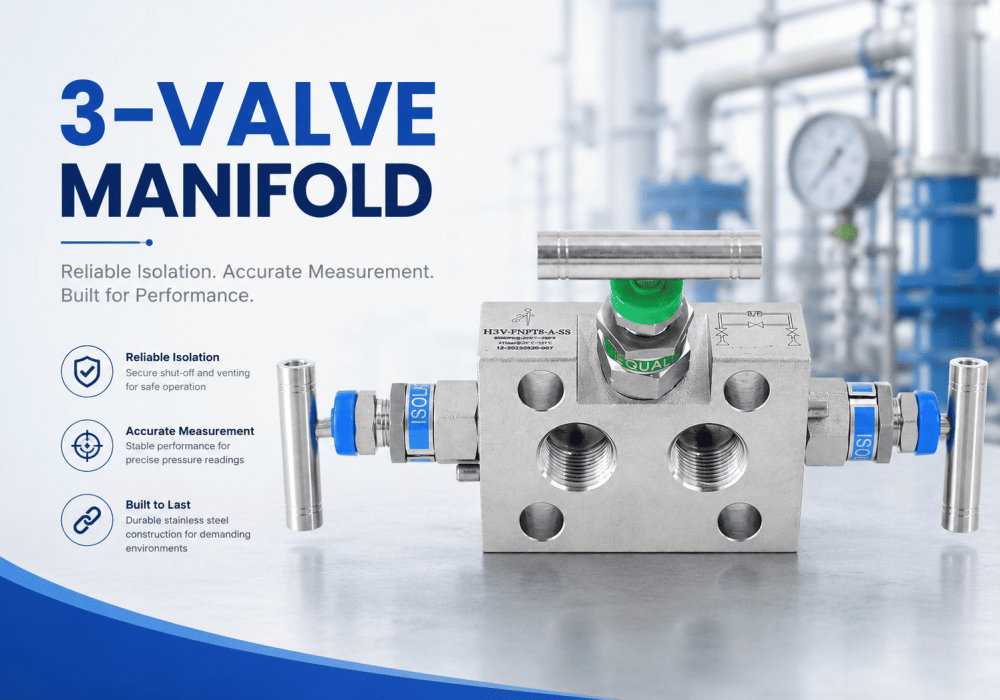
Compared with traditional 3 way manifolds, the 5 way design offers greater flexibility and safety, especially in critical measurement applications. The additional venting and equalization capabilities make routine calibration and maintenance easier, faster, and safer, which is why many modern process systems now specify 5 way manifolds as standard rather than optional components.
As industrial standards continue to evolve and automation levels increase, the demand for high-quality stainless steel 5 way manifolds is expected to grow. Manufacturers are responding with higher pressure ratings, more compact designs, improved sealing technologies, and customizable connection options to meet specific project requirements. These advancements further reinforce the role of the 5 way manifold as a core element in modern instrumentation systems.
In conclusion, a stainless steel 5 way manifold is far more than a simple valve assembly. It is a carefully engineered control hub that enhances safety, accuracy, and operational efficiency across a wide range of industries. For engineers and procurement professionals seeking dependable performance in challenging conditions, stainless steel 5 valve manifolds remain a proven and future-ready solution.
 English
  Arabic
  Spanish
  Russian